
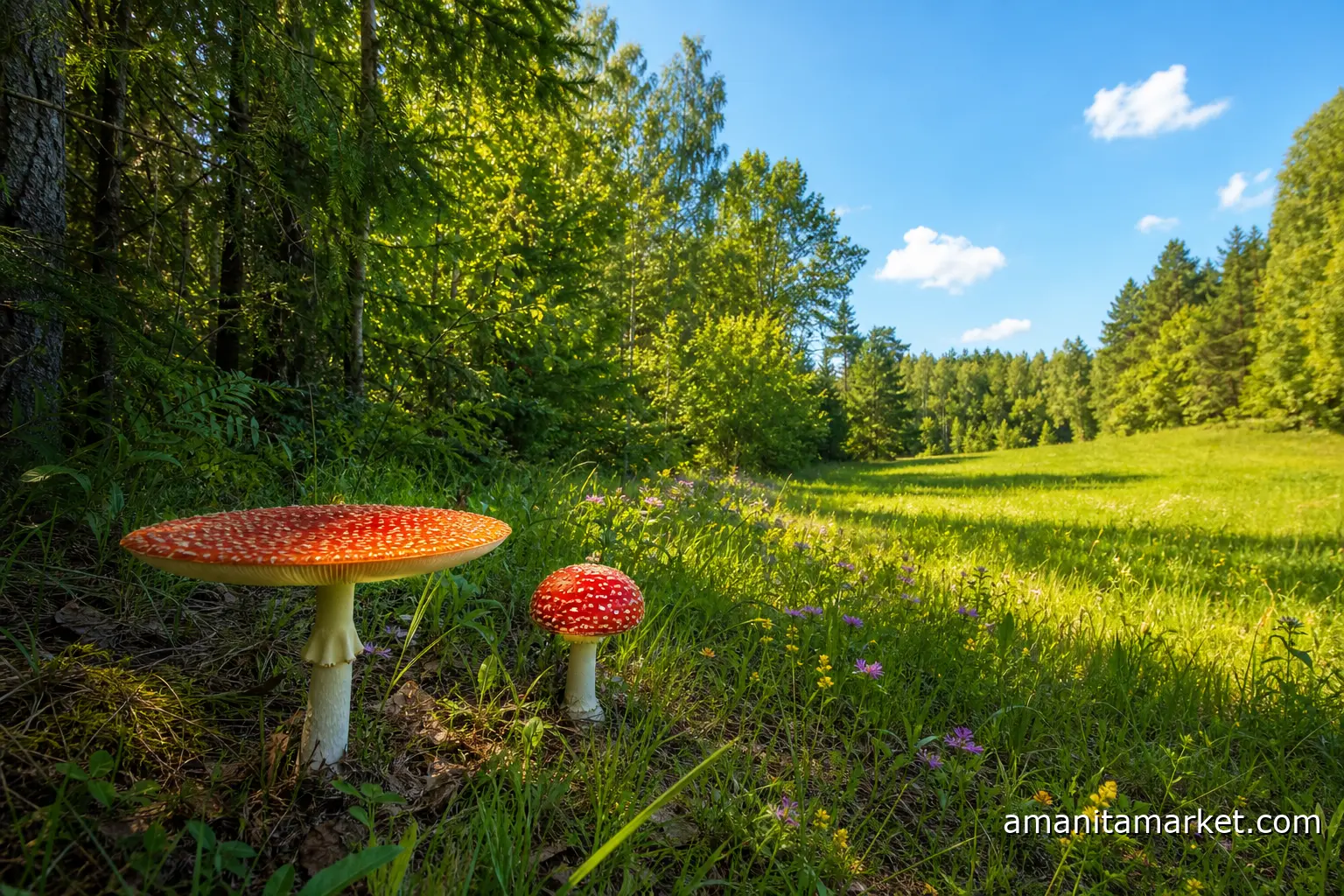
Amanita muscaria has been used by human cultures in remarkably diverse ways across thousands of years — from Siberian shamanic ceremonies to European incense rituals, from Christmas decoration to botanical collecting. Understanding the full range of traditional and contemporary uses helps explain why dried fly agaric remains one of the most sought-after ethnobotanical products in Europe today.
Ritual and Ceremonial Use: The Oldest Tradition
The most extensively documented traditional use of Amanita muscaria is in Siberian shamanic ceremony. Among the Koryak, Evenki, Chukchi, and related peoples of northeastern Siberia, dried fly agaric was used in winter solstice ceremonies as a ritual substance enabling shamans to enter trance states, communicate with spirits, and perform healing work for their communities.
This tradition is one of the longest documented continuous uses of any botanical in human history. Ethnographers collecting accounts from the 18th century onward documented ceremonial protocols that had been refined over generations — suggesting the practice had been established for much longer than the written record captures. For the full shamanic history, see our article on Amanita muscaria and Siberian shamanism.
Incense: A Pan-European Tradition
In Central and Northern European folk tradition, dried fly agaric has been burned as Räucherwerk — ritual incense — for centuries. The German Rauhnächte tradition, observed between Christmas and Epiphany, involves burning aromatic botanical materials to cleanse living spaces and mark the seasonal transition. Fly agaric appears in regional variants of this tradition across the German-speaking Alpine zone, alongside other forest botanicals.
When burned on charcoal or heated stones, dried fly agaric caps release a mild, earthy, distinctive aromatic smoke. This incense use is the primary contemporary application in the European ethnobotanical market — and it connects directly to centuries of documented practice. For more on incense use, see our guide to fly agaric as ethnobotanical incense.
How Fly Agaric Has Been Used Across Time
Pulled together, the mushroom’s uses span ritual, domestic, and decorative life across several cultures and centuries. The table below maps the main ones.
| Use | Era / region | Status today |
|---|---|---|
| Shamanic ceremony | Siberia, ancient – present | Documented traditional use |
| Ritual incense (Räucherwerk) | Central Europe, centuries | Primary modern EU use |
| Decoration / luck symbol | Europe, 1880s – present | Active |
| Collector’s specimen | Modern ethnobotany | Active |
All of the contemporary uses — incense, decoration, and collecting — are legally established in Germany, Austria, and most EU member states.
Decoration and Seasonal Symbolism
As a decorative object, Amanita muscaria has one of the longest traditions of any natural material in European culture. The fly agaric appears in German and Central European Christmas decoration from at least the 1880s — as hand-blown glass ornaments, as papier-mâché figurines, and as a motif on greetings cards, textiles, and ceramics. Its role as a Glückspilz — a luck symbol — made it a natural element of New Year and Christmas visual culture.
Today, dried fly agaric caps retain this decorative function alongside their incense use. The visual impact of a whole dried cap — deep red, with white spot remnants, preserving the natural form of the mushroom — makes it a striking and meaningful natural object for those interested in forest botany, European folk tradition, or natural material decoration. For more on the luck symbol tradition, see our article on fly agaric as a luck symbol in Europe.
Botanical Collecting and Ethnobotanical Study
For naturalists, mycologists, and those interested in ethnobotany, dried fly agaric is a significant collector’s specimen. As the world’s most culturally documented psychoactive fungus, and the mushroom most associated with global symbolic traditions from Siberian shamanism to the Christmas fairy tale, it occupies a unique position in any collection of significant natural objects.
The wild-harvested nature of the product adds to its interest as a specimen: all fly agaric is genuinely wild, collected from specific forest ecosystems in specific seasons by experienced foragers. No cultivated version exists. Each specimen represents a particular forest, a particular season, a particular ecological moment. This authenticity is part of what distinguishes a quality ethnobotanical specimen from a manufactured product.
Fly Agaric in Contemporary Ethnobotany
The contemporary ethnobotanical market reflects a growing interest in traditional botanical practices, natural materials with genuine cultural heritage, and the recovery of knowledge about how European and indigenous peoples related to the plants and fungi around them. Fly agaric sits at the centre of this interest: it is visually iconic, historically significant, ecologically fascinating, and legally available across most of the EU.
Our dried Baltic fly agaric — wild-harvested from pristine birch and pine forests in Lithuania, Latvia, and Estonia — is produced for this market: for collectors, for those interested in traditional incense practice, and for anyone drawn to one of the most remarkable organisms in the natural world. You can explore the full range of sizes and formats in our shop. For a complete guide to selecting quality dried fly agaric, see our fly agaric powder guide.
Frequently Asked Questions
How is fly agaric used today?
Mainly in three ways: as ritual incense burned on charcoal, as a collector’s botanical specimen, and as seasonal decoration.
Can you burn it as incense?
Yes. Dried caps placed on charcoal or heated stones release an earthy aromatic smoke — the primary contemporary use in the European market.
Is fly agaric legal?
As an ethnobotanical and decorative item, dried fly agaric is legally available across most of the EU, including Germany and Austria.
Sources
- Rätsch, C. (2005): The Encyclopedia of Psychoactive Plants: Ethnopharmacology and Its Applications. Park Street Press.
- Wikipedia — Ethnobotany: the study of human relationships with plants and fungi
- Wikipedia — Amanita muscaria: cultural history and traditional uses
- Wikipedia — Rauhnächte: Central European ritual incense tradition
- Tylš et al., MDPI 2021 — Amanita muscaria: ethnobotany and cultural use
Premium dried fly agaric for collectors, incense enthusiasts, and those who appreciate extraordinary botanicals — wild-harvested Baltic Amanita muscaria, available now.