
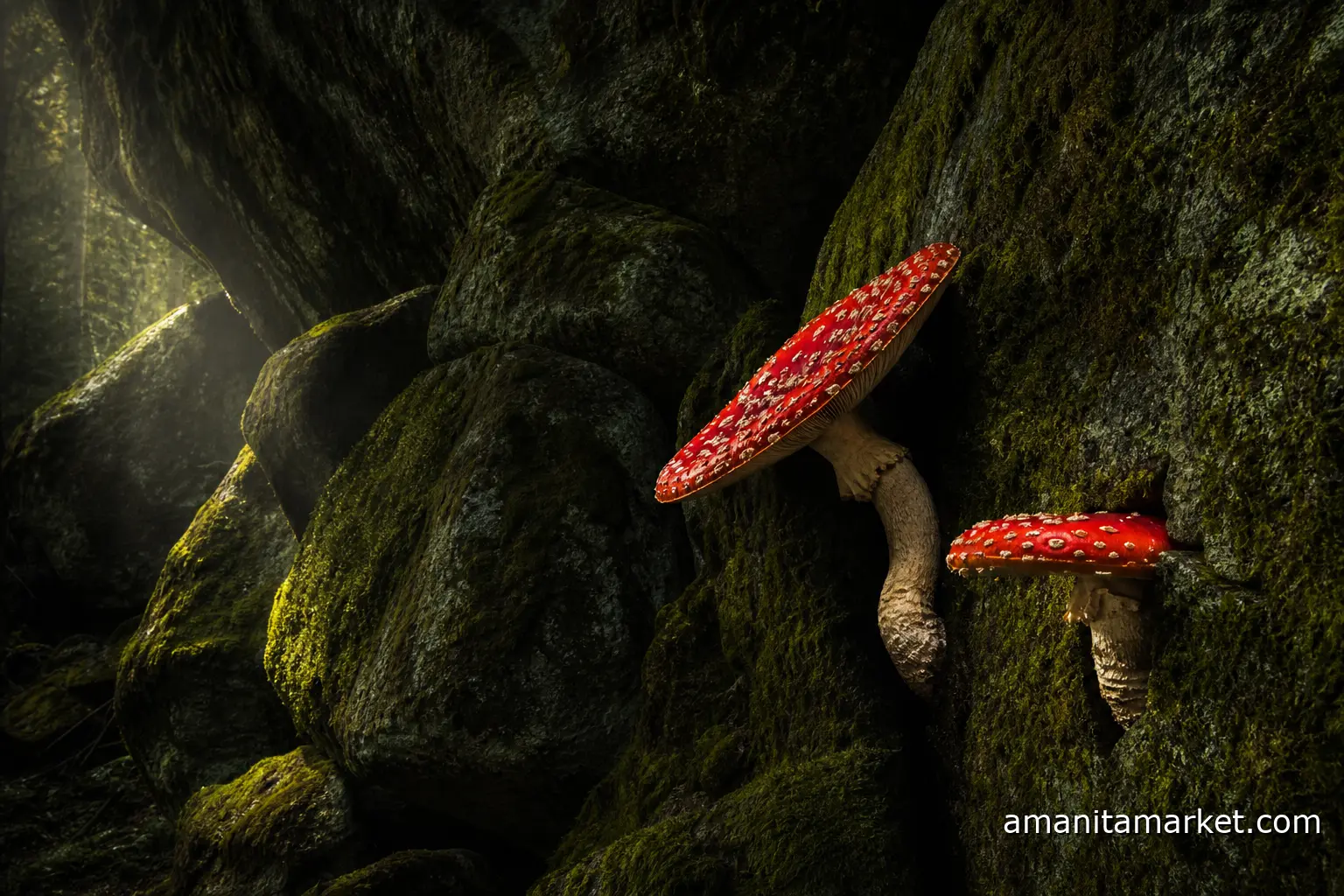
Odin is the most complex deity in the Norse pantheon — simultaneously a god of war, wisdom, death, poetry, and ecstatic magic. His attributes overlap so precisely with the archetype of the Siberian shaman that scholars of comparative religion have proposed a direct cultural connection. At the intersection of these two figures stands Amanita muscaria: the mushroom most associated with Siberian shamanism, and a substance whose possible role in Norse ritual practice has generated genuine academic debate.
Odin as Shamanic Archetype
The parallels between Odin and the Siberian shaman are detailed enough to have been taken seriously in academic literature. Neil Price, in his 2019 study The Children of Ash and Elm, provides the most thorough recent analysis. Like the Siberian shaman, Odin travels between worlds — the nine worlds of Norse cosmology correspond structurally to the three-world model of Siberian shamanic cosmology. Like the shaman, Odin undergoes self-sacrificial ordeal to gain hidden knowledge: he hangs on Yggdrasil for nine days without food or water to receive the runes.
Odin practices seiðr — a form of magic involving trance, spirit journey, and divination that structurally mirrors Siberian shamanic practice. The Eddic sources describe seiðr as performed in a specific altered state, using specific chanting (galdr) and physical apparatus including a special staff. Odin is associated with death and its transformation, with shapeshifting, with animal spirit helpers (his ravens Huginn and Muninn, his wolves Geri and Freki) — all hallmarks of shamanic cosmology across Eurasia.
Odin and the Siberian Shaman: Point by Point
Laid side by side, the correspondences are striking enough to explain why the comparison has been taken seriously by historians of religion.
| Feature | Odin | Siberian shaman |
|---|---|---|
| World travel | Moves through the nine worlds via Yggdrasil | Three-world cosmology (upper / middle / lower) |
| Ordeal for knowledge | Hangs nine days on the tree for the runes | Initiatory suffering and symbolic death |
| Trance magic | Seiðr and galdr | Drum-induced shamanic trance |
| Animal helpers | Ravens Huginn & Muninn, wolves Geri & Freki | Spirit animals and helper spirits |
| Sacred tree | Yggdrasil (with birch resonance) | Birch-centred shamanism (fly agaric host) |
Yggdrasil and the Birch Connection
Yggdrasil — the World Tree at the centre of Norse cosmology — is most commonly identified as an ash tree in the Eddic sources. However, some scholars have noted that the birch tree holds deep sacred significance in northern European and Siberian traditions, and that birch-centred shamanism is specifically where fly agaric ritual use is most documented. Amanita muscaria grows almost exclusively in association with birch and pine. The overlap between the tree’s sacred role and the mushroom’s ecological requirement is suggestive, though not conclusive.
Seiðr and the Altered State
The practice of seiðr as described in Old Norse sources involved entering a profound altered state — described in terms of the soul leaving the body, traversing spirit realms, and returning with information or having performed spirit-world tasks. The means of entering this state are not explicitly named in the written sources, which were largely compiled by Christian scholars in the 12th and 13th centuries who had limited interest in documenting pagan pharmacological practices.
The altered state associated with seiðr has been compared to the altered states documented in Siberian shamanism — where Amanita muscaria is specifically identified as the agent of transformation. Whether Norse seiðr practitioners used the same agent, or achieved equivalent states through purely non-pharmacological means (drumming, chanting, fasting), is not established in the surviving textual evidence.
The Soma-Odin Connection
A broader comparative argument connects Odin to the Indo-European tradition of the divine intoxicant. Georges Dumézil and other comparative mythologists identified structural parallels between Odin and Vedic deity-figures associated with the Soma ritual. If the Vedic Soma was indeed Amanita muscaria — as Wasson argued — and if Odin represents a northwestern European variant of the same shamanic-divine-intoxicant archetype, the connection to fly agaric is strengthened.
This chain of reasoning is speculative but not baseless: it rests on established comparative mythology methodology and on documented parallels between Vedic, Avestan, and Norse religious traditions. For the Vedic dimension, see our article on Amanita muscaria and the Vedic Soma.
The Valhalla Mead
Odin is closely associated with mead — specifically the mead of poetry (skáldskaparmjör), which he stole and which grants the ability to compose inspired verse to anyone who drinks it. In Norse mythology, mead appears not merely as an alcoholic beverage but as a transformative substance with divine properties. Some researchers have proposed that the mythological mead of inspiration — like the Vedic Soma — may reflect a memory of a psychoactive beverage that preceded the Norse period.
Whether Amanita muscaria was ever an ingredient in such a preparation, or whether the “mead of poetry” is purely mythological, is not resolved. But the cultural logic — a substance obtained through an extreme ordeal that transforms perception and grants access to hidden knowledge — resonates consistently with the fly agaric’s documented role in shamanic traditions.
What We Can and Cannot Conclude
The connection between Odin and Amanita muscaria is a matter of structural parallel, comparative mythology, and informed speculation — not direct historical evidence. No Norse text names fly agaric in a ritual context. No archaeological find links the mushroom to Odin’s cult specifically. What exists is a coherent set of parallels between Norse religious practice and the Siberian shamanic tradition where fly agaric use is well-documented.
For the full discussion of Vikings and fly agaric, see our article on did Vikings use fly agaric? For Germanic mythology broadly, see Amanita muscaria in Germanic mythology. The same birch-born mushroom is available today as our wild-harvested dried Amanita muscaria powder.
Frequently Asked Questions
Did Odin use fly agaric?
There is no direct evidence. The link is an inference from comparative mythology, not a documented historical fact.
Why is Odin connected to fly agaric?
His shamanic attributes — world travel, ordeal, trance, animal helpers — closely mirror Siberian shamanism, where fly agaric is the documented agent.
Is there proof the Norse used it ritually?
No surviving Norse text names the mushroom in a ritual context. The case rests on structural parallels, not evidence.
Sources
- Price, N. (2019): The Children of Ash and Elm: A History of the Vikings. Basic Books — Odin and Norse shamanism.
- Wikipedia — Odin: attributes, seiðr and shamanic parallels
- Wikipedia — Seiðr: Norse shamanic practice and trance tradition
- Wikipedia — Yggdrasil: the World Tree in Norse cosmology
- Wikipedia — Mead of poetry: Odin’s transformative intoxicant in Norse mythology
Amanita muscaria from the Baltic — fly agaric powder from the forests Odin’s world was shaped by. Wild-harvested, carefully dried, shipped across Europe.