
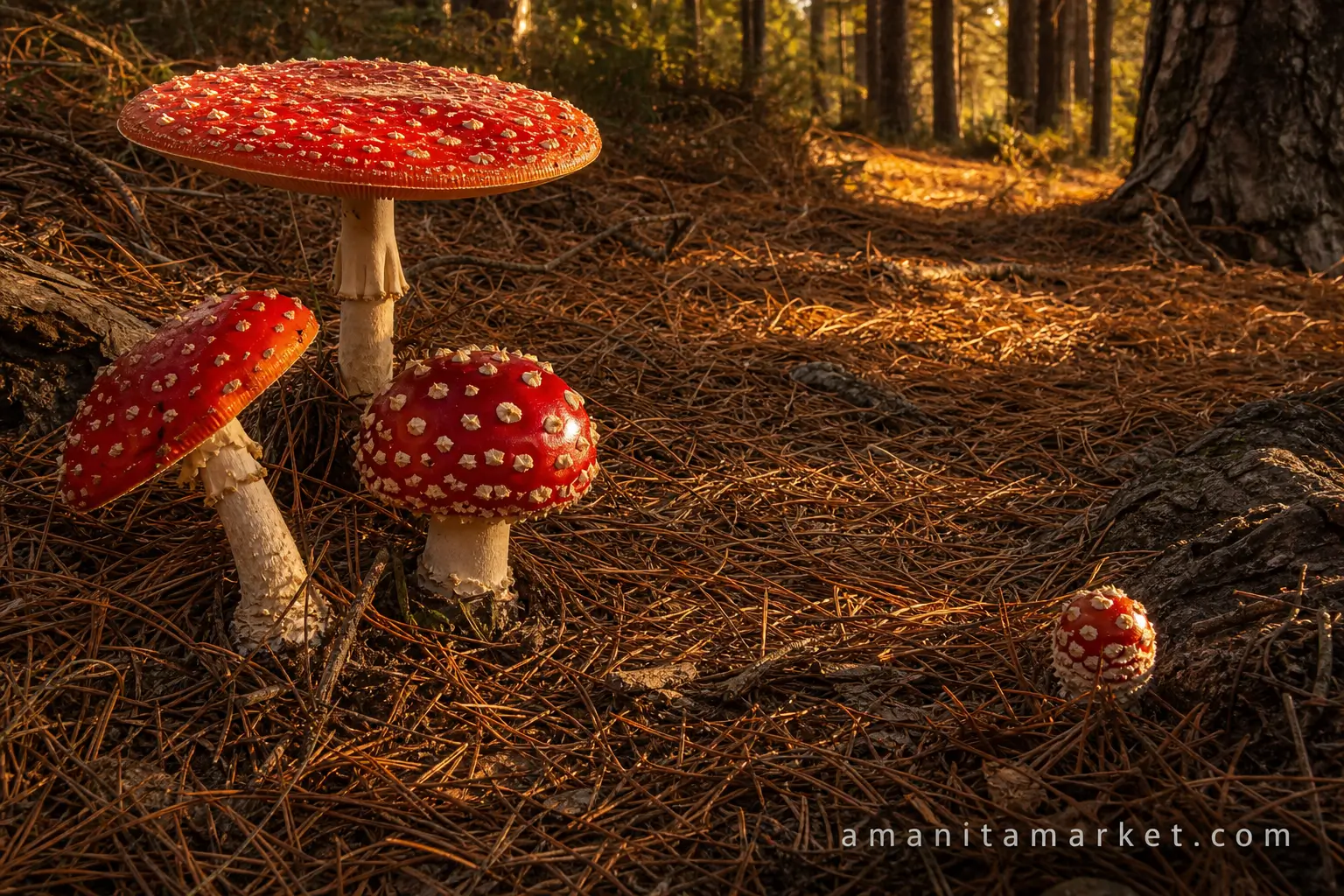
In Germany, Austria, and across Central Europe, the red-and-white fly agaric mushroom is one of the most recognisable symbols of good luck. It appears on New Year’s postcards, Christmas decorations, chocolate confections, and greeting cards. The Glückspilz — literally “lucky mushroom” — is a term that every German speaker knows. But how did a mushroom famous for its toxic properties become Europe’s most beloved symbol of fortune?
The Glückspilz: A Living Term
The German word Glückspilz means both “lucky mushroom” (the Amanita muscaria) and “lucky person” — someone who has stumbled into good fortune. This double meaning is embedded in the living language: if a German colleague says “du bist ein echter Glückspilz” (“you’re a real lucky mushroom”), they mean you are a fortunate person. The mushroom and the concept of luck are linguistically fused.
This fusion did not happen by accident. It reflects centuries of folk tradition in which the appearance of fly agaric in the forest was considered a positive omen — a sign that the forest was healthy, that the season was good, and that the year ahead would be prosperous.
The traditional German New Year’s lucky charm set — Glückssymbole — typically includes: a four-leaf clover (Kleeblatt), a chimney sweep (Schornsteinfeger), a lucky pig (Glücksschwein), a horseshoe (Hufeisen), and a fly agaric (Fliegenpilz). All five appear together on greeting cards and confectionery throughout the festive season. The fly agaric is the only fungus in any culture’s mainstream lucky symbol canon.
Origins of the Luck Association
The precise historical origin of the fly agaric’s luck symbolism is difficult to pin down — it predates written records in most of its forms. Several overlapping explanations have been proposed by folklorists and cultural historians.
The most practical explanation: Amanita muscaria is a reliable indicator of forest health. It fruits only in association with mature birch and pine trees in undisturbed forest ecosystems. Finding fly agaric means the forest is old, clean, and productive — conditions associated with good hunting, abundant mushroom harvests generally, and a landscape untouched by disease or catastrophe. For pre-modern forest communities, a fly agaric was literally a sign that things were going well.
A second strand of explanation connects the luck symbolism to the mushroom’s seasonal appearance. Fly agaric fruits in autumn, just before the harvest season ends and winter begins. In a pre-industrial agricultural context, the sight of bright red mushrooms in the forest at harvest time was a joyful seasonal marker — the forest providing its own abundance alongside the fields.
Christmas and Midwinter Symbolism
The connection between fly agaric and the Christmas-New Year period is the most widely visible dimension of its luck symbolism today. This connection likely has multiple roots: the mushroom’s autumn-to-early-winter fruiting season, the Siberian shamanic midwinter traditions (explored in our article on Amanita muscaria and Santa Claus), and the colour symbolism of red and white — the colours of Christmas.
By the 19th century, the fly agaric had been fully incorporated into the Central European Christmas visual vocabulary. Christmas tree ornaments in the shape of fly agaric mushrooms were produced in Thuringia (a centre of German Christmas decoration manufacture) from at least the 1880s. These ornaments spread globally with the German Christmas tradition and remain popular today.
The Luck Symbol Across Europe
The lucky fly agaric is not exclusively German. Related traditions exist across Central and Northern Europe. In Scandinavian countries, the mushroom appears in folk art and seasonal decoration. In Czech and Slovak folk art, the red mushroom with white spots is a common decorative motif associated with good fortune and the forest. In the Baltic states — Lithuania, Latvia, Estonia — the mushroom carries symbolic weight as part of the broader cultural relationship with the forest that shapes Baltic identity.
In the British tradition, the fly agaric appears in fairy illustration from the Victorian period onward — a visual association with the “fairy ring” and enchanted forest that, while different from the continental luck tradition, reflects a similarly positive and magical framing. For the wider picture of fly agaric in European folklore, see our article on fly agaric in fairy tales and folklore.
Irony and Inversion: The Toxic Lucky Charm
There is an appealing irony in the fact that Europe’s most beloved lucky symbol is a mushroom with a reputation for toxicity. This inversion — the dangerous thing that brings luck — is actually a common pattern in folk symbolism. The horseshoe was an iron tool that could injure; the chimney sweep was covered in soot from a fire that could kill. Objects associated with power, force, and risk carry symbolic charge that transforms into luck when harnessed correctly.
The fly agaric’s very distinctiveness — its unmistakable appearance, its refusal to be ignored — is part of what made it a natural candidate for symbolic significance. You cannot walk past a fly agaric without noticing it. In a forest full of drab brown mushrooms, the red-and-white beacon demands attention. Attention becomes meaning, and meaning becomes symbol.
Sources
Order fly agaric online — premium dried Amanita muscaria powder, vacuum-sealed and shipped EU-wide from our Baltic forest source.