
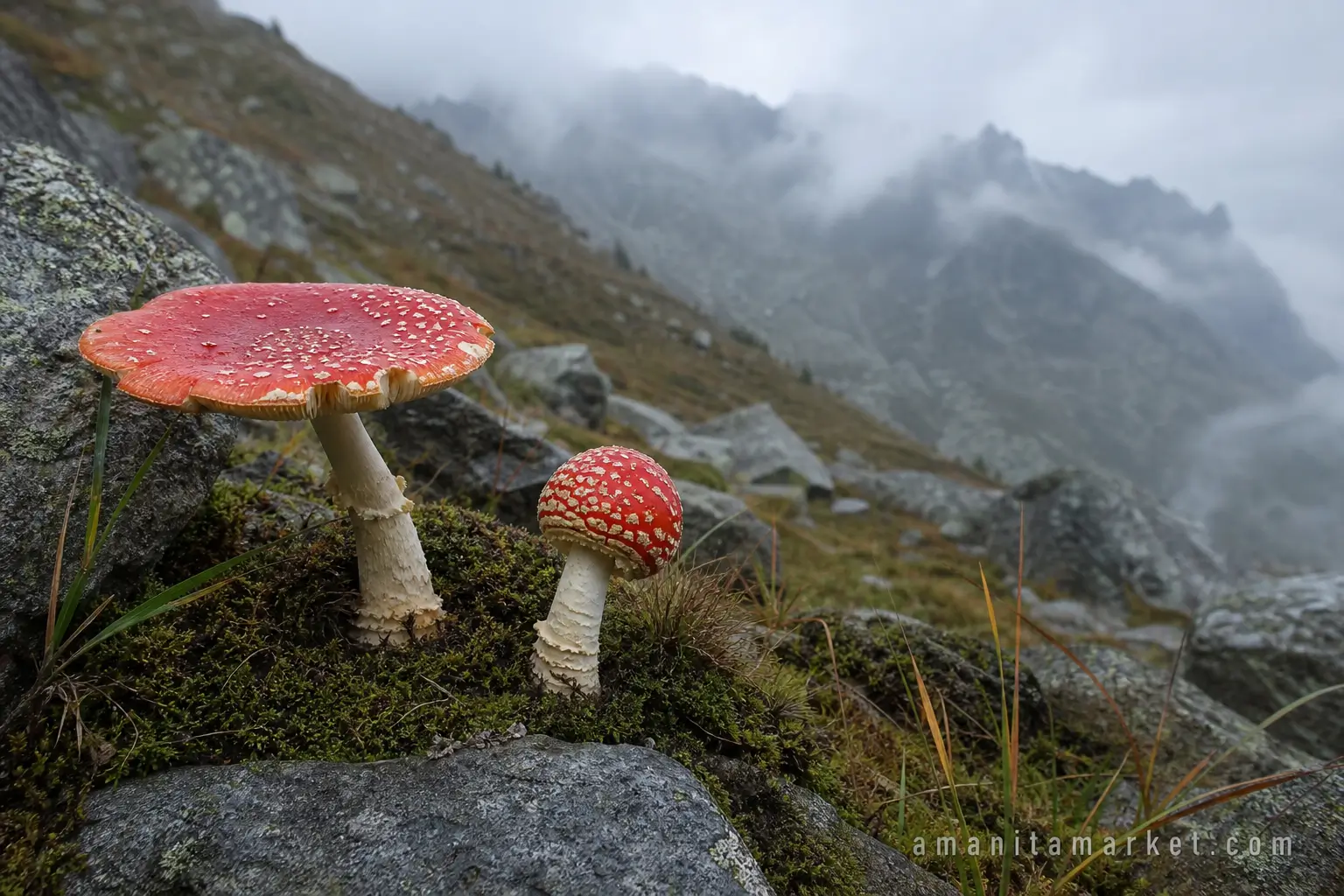
Long before dried fly agaric became available as a product online, it was burned. The use of Amanita muscaria as a ritual and aromatic botanical — placed on hot coals, heated stones, or charcoal discs to produce fragrant smoke — is one of the oldest documented applications of the mushroom in human culture. Today, dried amanita muscaria is sold and purchased across Europe as an ethnobotanical incense material, continuing a tradition that connects the modern buyer to thousands of years of ceremonial use.
The Ethnobotanical Product Category
Ethnobotanical products are plants, fungi, and other natural materials with documented historical, cultural, or traditional uses. The category is broad — it includes resins like frankincense and copal, herbs like mugwort and sage, woods like sandalwood and palo santo, and fungi like Amanita muscaria. What defines an ethnobotanical product is not any pharmacological claim but the depth and authenticity of its cultural history.
Amanita muscaria qualifies as an ethnobotanical product by any standard. It has documented ritual use across Siberian, Central Asian, European, and possibly South Asian traditions spanning at least several thousand years. Its cultural history is among the most extensively documented of any fungal species, and that history includes a clear tradition of burning the dried mushroom for aromatic and ceremonial purposes.
Traditional Incense Use: The Historical Record
In Siberian shamanic practice, fire was the central axis of ceremony — the smoke hole of the yurt connecting the human world to the spirit realm above. Materials placed on the fire, including dried mushroom material, were understood to carry intention and communication upward through the smoke. German ethnobotanist Christian Rätsch, in his encyclopaedic Encyclopedia of Psychoactive Plants, documents fly agaric’s use as Räucherwerk (ritual incense) across multiple European and Siberian traditions.
In the Central European Rauhnächte tradition — the twelve ritual nights between Christmas and Epiphany — aromatic plants have been burned for centuries to cleanse living spaces and mark the turning of the year. Regional variants of this tradition in the German-speaking Alpine zone include fly agaric among the botanical materials used. Whether this reflects an ancient continuity or a later incorporation, it places Amanita muscaria firmly in the European incense canon. For more on this history, see our article on fly agaric incense history.
The German tradition of Räucherwerk — ritual aromatic burning — encompasses a wide range of botanical materials: juniper, mugwort, angelica, resin-rich woods, and various fungi. The tradition is rooted in pre-Christian practice and has survived into the modern era as a living folk custom, particularly in Alpine regions. Fly agaric (Fliegenpilz) has a documented place in this tradition as one of several forest botanicals used in seasonal ceremonies.
How Dried Fly Agaric Is Used as Incense
Dried fly agaric — either whole caps, pieces, or powder — can be burned in several ways. The most common method in traditional European practice is to place small pieces of dried cap on a glowing charcoal disc (the type used for church incense). The charcoal provides sustained, controlled heat that releases the mushroom’s aromatic compounds gradually over fifteen to thirty minutes without flaring or combusting the material directly.
Alternatively, pieces can be placed on a mesh screen over a tea-light candle — a setup that provides gentle indirect heat. This produces a milder, cooler burn and is suitable for indoor use in well-ventilated spaces. A third option, more traditional, is to place cap pieces on heated stones or the edge of a fire — the method used in Siberian and European folk tradition before modern charcoal became available.
The aroma of burning fly agaric is earthy, distinctive, and difficult to compare directly to other incense materials. It has a mushroom-forest character with slightly resinous undertones. The scent is lighter than heavy resins like frankincense or myrrh and more diffuse than aromatic herbs like sage. It dissipates relatively quickly, making it well-suited to shorter ritual or atmospheric uses rather than sustained all-day burning.
Positioning and Legal Context
Across Europe, dried Amanita muscaria is legally sold and purchased as an ethnobotanical incense material. It is not classified as a controlled substance in Germany, Austria, the Netherlands, or most EU member states, and there is no restriction on its possession or use as incense. It is positioned as an ethnobotanical product — a traditional botanical with deep cultural roots — not as a food, supplement, or medicine.
This positioning is both legally appropriate and factually accurate. The mushroom’s history as an incense and ceremonial material is genuine and well-documented. Purchasing dried fly agaric as a traditional botanical for aromatic use connects the buyer to an authentic cultural tradition. Our full range of dried fly agaric — whole caps and powder — is available for exactly this purpose.
Quality for Incense Use
For incense use, the same quality indicators that apply to any dried fly agaric product apply here. Colour should be a warm ochre-red, not dark brown or black (over-dried). Aroma before burning: mild, earthy, pleasant. Texture: dry and firm, not soft or moist. Origin: ideally specified as Baltic or Northern European wild harvest. Caps-only products produce a cleaner burn than mixed cap-and-stem material.
For guidance on assessing and storing dried fly agaric quality, see our articles on the fly agaric powder guide and how to store fly agaric.
Sources
- Wikipedia — Incense: history, types and ethnobotanical traditions of aromatic burning
- Wikipedia — Rauhnächte: Central European ritual incense ceremony tradition
- Wikipedia — Christian Rätsch: Encyclopedia of Psychoactive Plants and Räucherwerk documentation
- Wikipedia — Ethnobotany: the cultural and traditional use of plant and fungal materials
Our 500g bulk pack is the best value option for those who use dried fly agaric regularly as an ethnobotanical incense — wild-harvested Baltic amanita muscaria, vacuum-sealed for freshness.