
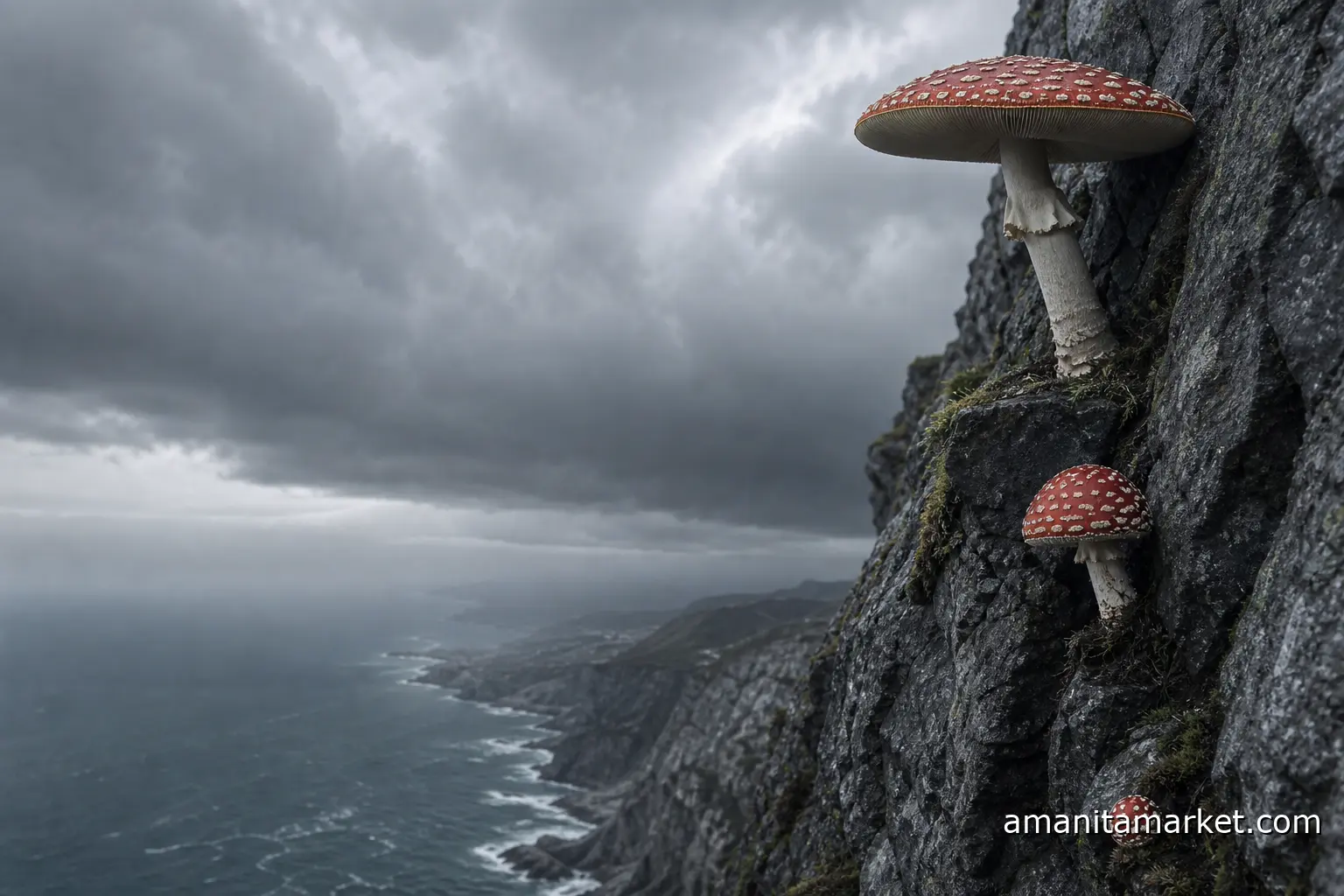
Few questions in Norse history generate more heated debate than this one: did the Vikings use fly agaric? The theory — that Amanita muscaria fuelled the berserker battle frenzy — has circulated for over two centuries, appearing in academic papers, documentaries, and popular histories. This article examines the specific evidence relating to Viking use of the mushroom, distinct from the broader berserker question.
The Viking Relationship with Psychoactive Plants
Before addressing fly agaric specifically, it is worth establishing that Norse culture had a documented relationship with altered states of consciousness. Seiðr — the shamanic practice associated with Odin and the vǫlur (female shamanic practitioners) — involved trance states achieved through drumming, chanting, and ritual isolation. Whether plants or fungi assisted these practices is not stated in the primary sources, but the structural parallel with Siberian shamanism — where Amanita muscaria is well-documented — has been noted by historians including Neil Price in his extensive study of Viking-Age magic.
Hemp (cannabis) has been found in archaeological contexts associated with Norse burials and settlement sites, suggesting familiarity with at least some psychoactive plants. Henbane seeds have been recovered from ritual contexts across Northern Europe. The Norse pharmacopoeia, while poorly documented in written sources, was clearly not limited to mead and ale.
Samuel Ödman’s 1784 Hypothesis
The earliest systematic argument connecting Vikings and fly agaric came from Swedish clergyman and naturalist Samuel Ödman in 1784. In an essay for the Royal Swedish Academy of Sciences, Ödman proposed that the berserker battle frenzy described in the sagas was pharmacologically induced by Amanita muscaria. He drew on accounts of Siberian shamanic use as comparative evidence and argued that the symptom profile — extreme agitation, apparent superhuman strength, subsequent collapse and amnesia — matched the documented effects of the mushroom.
Ödman’s hypothesis was not a fringe idea: it was published in a prestigious scientific forum and taken seriously by scholars. It remains the foundational reference for all subsequent academic discussion of the Viking-fly agaric connection.
Fly Agaric vs Henbane: The Two Leading Candidates
The berserker state described in the sagas — violent trembling, extraordinary strength, apparent pain insensibility, then collapse and amnesia — has been attributed to two main plants. The table below compares them on the points that matter for the historical case.
| Factor | Fly agaric (A. muscaria) | Henbane (H. niger) |
|---|---|---|
| Availability in Scandinavia | Abundant in birch-pine woodland | Widespread, incl. ritual finds |
| Effect profile | GABA-A sedation + ibotenic excitation | Aggression, agitation, delirium |
| Direct saga/archaeological proof | None confirmed | None confirmed |
| Key proponent | Ödman (1784) | Fabing (1956), Fatur (2019) |
What the Archaeological Evidence Shows
Direct archaeological evidence for fly agaric use in Viking-Age Scandinavia is absent — no mushroom residues, no identifiable preparation equipment, no iconographic depictions. This absence is significant but not conclusive: mushrooms do not preserve well archaeologically, and the identification of fungal residues requires specialised archaeobotanical analysis that has rarely been applied to Viking-Age contexts.
What the archaeology does show is the presence of Amanita muscaria across the same birch-pine woodland landscapes that Vikings inhabited throughout Scandinavia and the Baltic. The mushroom was unavoidably present in the environment. Whether it was used ritually or in combat contexts, rather than simply avoided or ignored, is the question the archaeology cannot currently answer.
The Henbane Counter-Argument
The most serious scholarly challenge to the fly agaric hypothesis came from historian Howard Fabing in 1956 and has been refined by subsequent researchers including Karl Sax. The counter-argument centres on henbane (Hyoscyamus niger) as a more pharmacologically plausible candidate for the berserker state. Henbane produces genuinely aggressive and agitated states, is found throughout Scandinavia, and has documented use in Norse-era contexts.
A 2019 paper by Karsten Fatur in the Journal of Ethnopharmacology examined the sagas’ botanical references systematically and concluded that henbane was a more consistent fit for the described berserker symptomatology than fly agaric. This does not disprove mushroom use — it establishes that the pharmacological case is not unambiguous. For the full berserker debate, see our article on fly agaric and Viking berserkers.
Norse Mythology and the Mushroom
Beyond the berserker question, there is a broader argument for Amanita muscaria’s significance in Norse culture based on mythological parallels. Odin — the wandering, shape-shifting, sacrifice-performing god who acquired hidden knowledge through extreme ordeal — shares so many structural attributes with the Siberian shaman archetype that historians of religion have proposed a direct cultural connection. If the shamanic archetype carried Amanita muscaria use with it as it spread westward from Siberia, Norse culture would be a natural recipient — a tradition explored in our article on Amanita muscaria and Siberian shamanism.
The problem is that mythological parallel is not the same as historical evidence. Structural similarity between Norse and Siberian shamanism could reflect a shared Proto-Indo-European ancestor without implying direct transmission of specific ritual practices. For more on Odin’s shamanic attributes and their possible connection to fly agaric, see our dedicated article on Odin and fly agaric.
The Honest Assessment
Did Vikings use fly agaric? The answer is: possibly, but not proven. The circumstantial case is real — the mushroom was abundant, the cultural framework for psychoactive plant use existed, and the mythological parallels with Siberian shamanism are genuine. But no direct evidence confirms the use, and alternative pharmacological explanations for the berserker state are plausible.
What is certain is that Amanita muscaria was part of the landscape Vikings inhabited and that it carried symbolic and cultural weight in the broader Northern European tradition. Today the same wild-harvested mushroom is available as a collector’s botanical — you can browse our range of dried Amanita muscaria powder if you want to hold a piece of that northern heritage.
Frequently Asked Questions
Is there proof Vikings used fly agaric?
No. There is no direct archaeological or textual proof; the case is entirely circumstantial, based on the mushroom’s abundance and cultural parallels.
Who first proposed the theory?
Swedish naturalist Samuel Ödman, in a 1784 essay for the Royal Swedish Academy of Sciences.
What is the main alternative explanation?
Henbane (Hyoscyamus niger), argued by Fabing (1956) and Fatur (2019) to be a closer match for the berserker symptoms.
Sources
- Fatur, 2019 — Sagas of the Solanaceae: Norse berserkers and henbane (Journal of Ethnopharmacology, PubMed)
- Price, Neil (2019): Children of Ash and Elm: A History of the Vikings. Basic Books.
- Wikipedia — Berserker: sources, theories and scholarly debate
- Wikipedia — Seiðr: Norse shamanic practice and trance tradition
- Wikipedia — Neil Price: archaeologist and specialist in Viking-Age religion
Explore premium dried fly agaric from the Baltic — wild-harvested Amanita muscaria powder from the same northern forests the Vikings called home.