
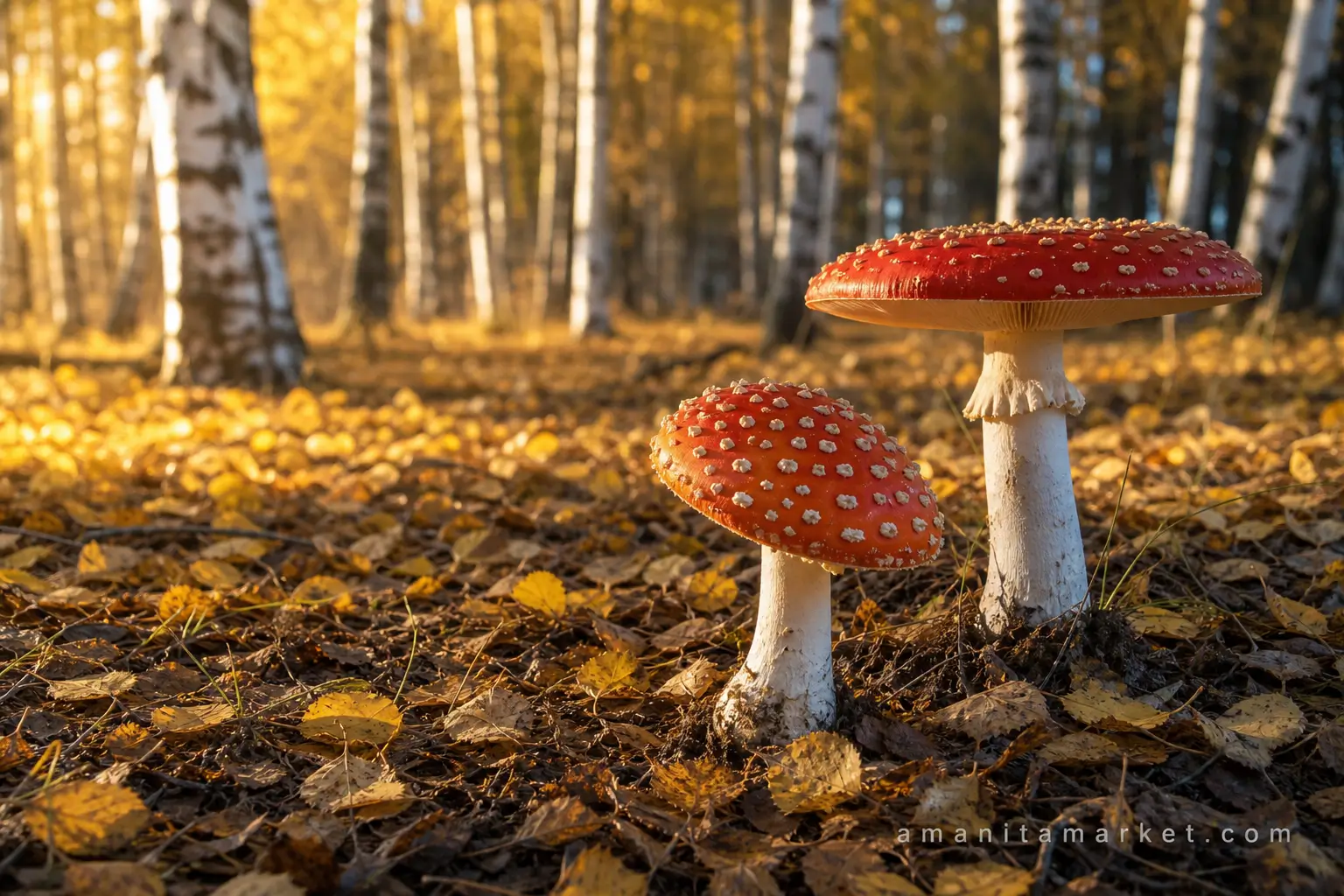
Among the most debated questions in ethnobotany is the identity of Soma — the divine ritual drink described in over a hundred hymns of the ancient Rig Veda, composed approximately 3,500 years ago. In 1968, American ethnomycologist R. Gordon Wasson proposed that Soma was prepared from Amanita muscaria. The theory transformed academic understanding of the fly agaric mushroom and sparked a debate that continues to this day.
What Is Soma?
Soma is simultaneously a deity and a drink in Vedic religion — the ninth mandala (book) of the Rig Veda is dedicated entirely to its praise. The Vedic hymns describe Soma as a plant pressed and filtered to produce a liquid, consumed by priests and gods alike to achieve divine inspiration, immortality, and ecstatic vision. The drink was prepared during elaborate rituals involving pressing stones, woollen filters, and mixing with milk or water.
Despite the detailed ritual descriptions, the Rig Veda’s language about Soma’s botanical identity is allusive rather than precise. No plant is named directly. The mushroom — or plant — was already disappearing from direct knowledge by the time the texts reached their final form, replaced by substitute plants as the Aryan peoples moved from the Central Asian steppes into the Indian subcontinent where the original Soma plant did not grow.
Over a dozen plant candidates have been proposed for Soma over two centuries of scholarship: Amanita muscaria (Wasson), Syrian rue (Peganum harmala), ephedra (Ephedra sinica), cannabis (Cannabis sativa), and others. No consensus has been reached. The debate continues among Vedic scholars, botanists, and ethnobotanists.
Wasson’s Argument: The Case for Fly Agaric
R. Gordon Wasson, in his landmark 1968 work Soma: Divine Mushroom of Immortality, marshalled a multi-layered argument for Amanita muscaria as the Vedic Soma. His case rested on several interlocking lines of evidence.
Geographic origin: The Indo-Aryan peoples who composed the Rig Veda originated in the Siberian-Central Asian steppe region, where Amanita muscaria shamanism was already a well-established tradition. As they moved south into the subcontinent, they would have carried their religious traditions with them — including the use of fly agaric in ritual contexts. When the mushroom became unavailable in the new climate, substitute plants were progressively adopted.
The pressing ritual: Soma was prepared by pressing and filtering. Wasson argued this exactly describes the preparation of mushroom material — pressing the caps to extract liquid, filtering through wool to remove solids. The resulting liquid would have contained muscimol.
Urine recycling: Several Rig Veda passages refer to drinking filtered Soma again after it has passed through the body. Wasson connected this to the documented practice in Siberian shamanism of recycling muscimol through urine — the only known psychoactive substance to pass through the body in active form.
The visual description: Soma is described as red, as growing without roots (no roots are described), as coming down from the mountains, and as connected to the moon. Wasson argued these attributes align with Amanita muscaria’s red colouration, mycorrhizal growth without visible substrate attachment, alpine and subalpine distribution, and the mushroom’s rhythmic appearance linked to rainfall patterns.
Scholarly Responses and Criticisms
Wasson’s thesis received both enthusiastic support and significant criticism. Vedic scholar Wendy Doniger (then O’Flaherty) provided a major foreword to Wasson’s book acknowledging the strength of his argument while noting its speculative elements. Botanist John Brough published a detailed critique in the Bulletin of the School of Oriental and African Studies in 1971, arguing that many of Wasson’s textual interpretations were strained and that the mushroom could not account for all Soma references.
Subsequent scholars have proposed alternative candidates. Ethan Russo and others have examined ephedra and cannabis as Soma candidates in the context of the Bactria-Margiana Archaeological Complex (BMAC), a Bronze Age culture in Central Asia where botanical residues have been found in ritual contexts. The BMAC evidence points to ephedra rather than mushrooms, though the two traditions may not be mutually exclusive.
The Theory’s Lasting Significance
Whether or not Amanita muscaria was the original Soma, Wasson’s work permanently transformed how scholars think about the relationship between psychoactive substances and the origins of religion. His thesis established the field of ethnomycology, influenced Joseph Campbell’s work on comparative mythology, and opened scholarly conversation about the role of entheogenic substances in the development of human religious experience.
The connection between fly agaric and the Vedic tradition is part of a much wider pattern explored in our article on fly agaric in world cultures. For the Siberian shamanic context that forms the geographical bridge between Central Asia and the Indian subcontinent, see our piece on Amanita muscaria and Siberian shamanism.
Sources
Dried fly agaric powder available now — wild-harvested amanita muscaria from pristine Baltic woodlands, shipped across Europe.