
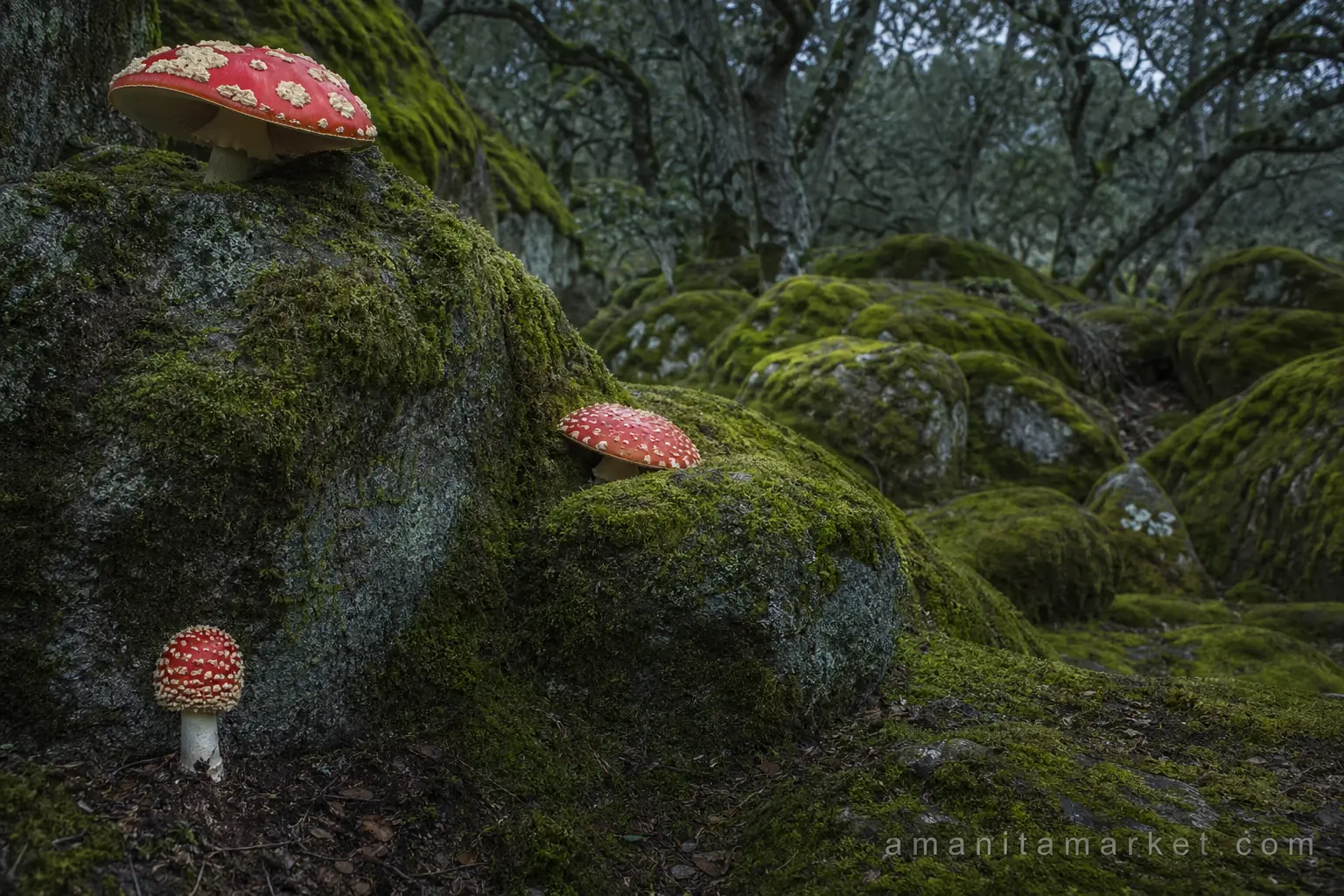
Amanita muscaria is the only mushroom with a documented presence in the ritual and symbolic life of cultures on multiple continents. From Siberian shamanism to Mesoamerican ritual, from Vedic India to Norse mythology, the fly agaric has left its mark across the full breadth of human cultural history. This article surveys what we know — and what remains debated — about the global cultural footprint of the world’s most recognisable mushroom.
Siberia: The Deepest Roots
The most extensively documented shamanic use of Amanita muscaria comes from Siberia, where indigenous peoples including the Koryak, Evenki, Chukchi, and Yakut incorporated the mushroom into winter solstice ceremonies. Shamans consumed dried fly agaric to enter trance states, communicate with spirits, and perform healing. This tradition, documented from the 18th century onward by Russian and European ethnographers, represents the best-evidenced shamanic use of the mushroom anywhere in the world.
The Siberian tradition is the likely origin point from which fly agaric use spread both eastward into the Americas (via the Bering land bridge or coastal migration routes) and westward into Central Asia and eventually Europe. For the full account, see our dedicated article on Amanita muscaria and Siberian shamanism.
India: The Soma Debate
The proposed connection between Amanita muscaria and the Vedic Soma — the divine ritual drink of the Rig Veda — represents one of the most consequential theories in ethnobotany. R. Gordon Wasson’s 1968 argument that Indo-Aryan peoples carried fly agaric shamanism from the Siberian-Central Asian steppe into the Indian subcontinent, where it became ritualised as Soma, has been vigorously debated but never definitively refuted.
If the theory is correct, Amanita muscaria influenced the development of Hinduism, the Vedic sacrificial tradition, and possibly the concept of amrita — the drink of immortality in Hindu and Buddhist cosmology. Even if the Soma identification is incorrect, the broader pattern of psychoactive plant use in early Vedic religion is well established.
Amanita muscaria grows across the entire Northern Hemisphere temperate zone — from Japan and Korea through Siberia, Central Asia, Europe, and North America. This distribution overlaps almost perfectly with the areas where its ritual use has been documented or proposed. The mushroom’s presence in so many cultures is not coincidence: it is the world’s most widely distributed psychoactive organism in the temperate zone.
Japan: Mycophilia and the Red Mushroom
Japan has one of the world’s most developed relationships with fungi, reflected in a rich vocabulary of mushroom names, a deep culinary tradition, and extensive mycological folklore. Amanita muscaria — known in Japanese as beni-tengu-take (“red tengu mushroom”) — is associated with the tengu: supernatural mountain spirits depicted as bird-human hybrids with long noses, often shown in red garments.
The tengu connection is significant. Tengu were associated with mountain forests, with martial arts and hidden wisdom, and with the ability to traverse between human and spirit realms — functions closely paralleling the Siberian shaman. Whether this reflects independent development or cultural transmission across the Eurasian landmass remains an open question, but the parallel is striking. For the full Japanese context, see our article on Amanita muscaria in Japan.
The Americas: Possible Pre-Columbian Connections
The evidence for Amanita muscaria use in the Americas is more contested than in the Old World. The mushroom grows throughout North America and was certainly known to indigenous peoples of the boreal forest zone. Some researchers have proposed ceremonial use among certain Pacific Northwest and Subarctic peoples, drawing parallels with Siberian traditions and citing migration routes across the Bering land bridge.
Mesoamerican mushroom use is better documented, but focuses primarily on psilocybin-containing species (teonanácatl in Nahuatl). Amanita muscaria’s role in Mesoamerican tradition, if any, is not clearly documented. The archaeological and iconographic evidence does not conclusively place fly agaric in the same ceremonial role as psilocybin mushrooms in this region.
Northern Europe: From Shamanism to Folklore
In Europe, the cultural journey of Amanita muscaria runs from possible shamanic use in Norse, Celtic, and Baltic traditions through medieval folklore and fairy-tale symbolism to its current status as a mainstream good-luck charm. The Viking berserker theory, the Celtic druid hypothesis, and the Baltic animistic traditions all represent distinct strands of this European story.
The clearest European evidence comes from the Baltic region, where the mushroom’s cultural significance is embedded in folk art, seasonal customs, and the landscape itself — the vast birch and pine forests that define the Baltic aesthetic. For more on this tradition, see our article on fly agaric in Baltic mythology.
Christmas: The Global Symbol
Ironically, the most globally recognised expression of fly agaric’s cultural presence today is the most recent: the Christmas luck symbol. Through the German tradition of the Glückspilz and the gradual globalisation of Central European Christmas iconography, the red-and-white mushroom became a worldwide visual shorthand for magic, good fortune, and the enchanted forest. This cultural journey — from Siberian shaman’s sack to global greeting card — represents one of the more remarkable transformations in the history of natural symbols. See our article on Amanita muscaria and Santa Claus for the full story.
Sources
- Wikipedia — Ethnomycology: the study of human relationships with fungi across cultures
- Wikipedia — R. Gordon Wasson: founding ethnomycologist and global mushroom research
- Tylš et al., MDPI 2021 — Amanita muscaria: global cultural distribution overview
- Wikipedia — Psychedelic substances: cross-cultural and historical context
Stock up on dried fly agaric — premium amanita muscaria powder from Baltic forests, shipped across the EU.