
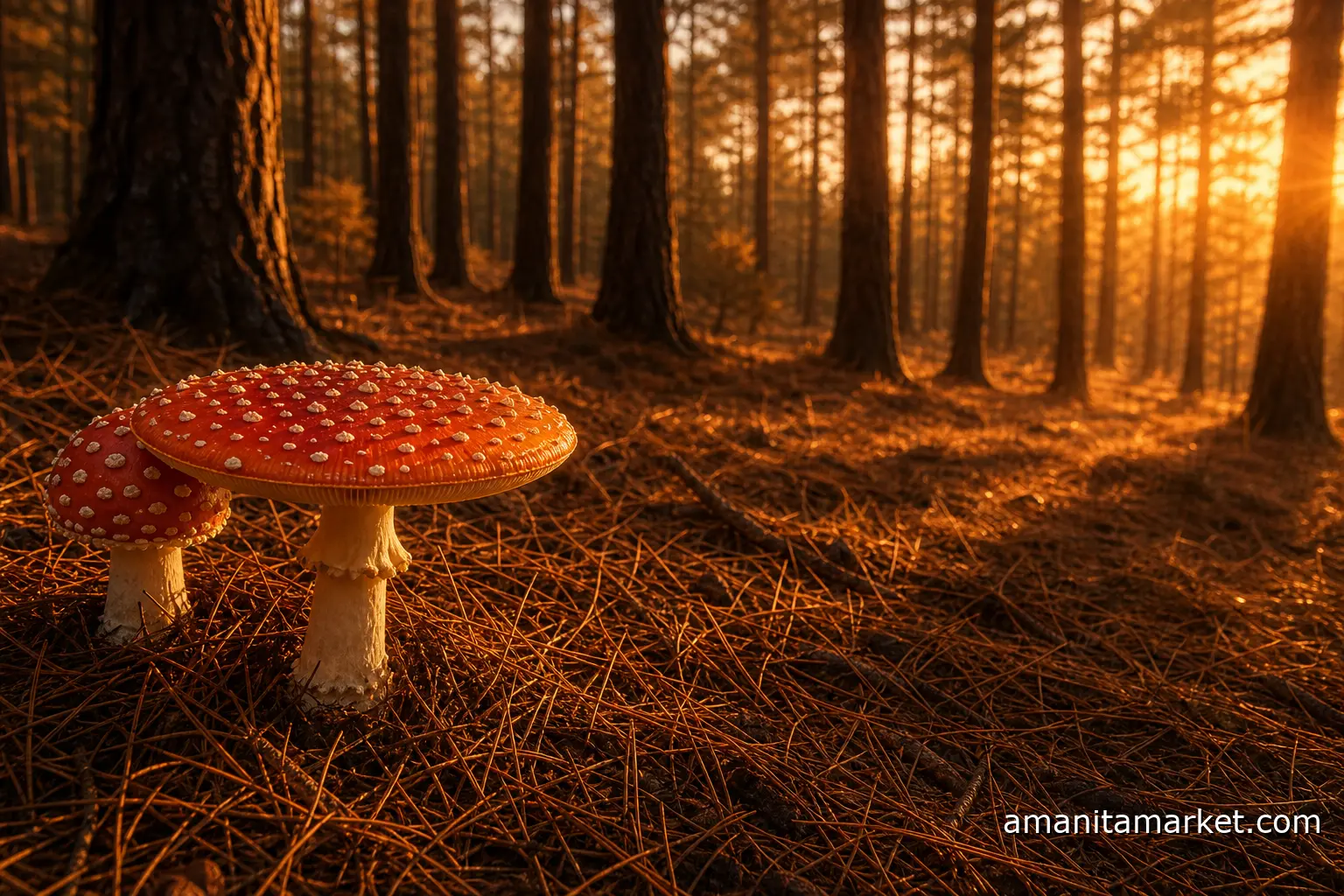
Amanita muscaria has been used as an incense and fumigation material in traditional European medicine for centuries — long before it became an object of scientific study. This practice, documented in historical botanical and medical literature, sits at the intersection of folk healing, ritual practice, and the ancient European tradition of using smoke as both medicine and spiritual medium.
Smoke as Medicine: The Historical Framework
The use of aromatic smoke for healing purposes is one of the oldest attested medical practices in human history. From the fumigation rituals of ancient Egypt and Mesopotamia to the smoke-purification ceremonies of indigenous peoples worldwide, the therapeutic and ritual use of smoke represents a universal element of pre-modern medicine. In European tradition specifically, the fumigation of sick rooms, the burning of specific plants to treat respiratory conditions, and the use of aromatic smoke in religious healing rituals were standard practices from classical antiquity through the early modern period.
Fly agaric entered this tradition through multiple routes: as a folk medicine in Finno-Ugric and Slavic cultures, where external applications of the mushroom were documented for joint pain and rheumatic conditions; as a component of Räucherwerk in Central European folk practice; and as a subject of early naturalist and physician interest in the 16th through 18th centuries.
Finnish Folk Medicine: External Applications
The most extensively documented folk medical use of Amanita muscaria in Europe comes from Finnish and related Finno-Ugric traditions. Ethnobotanist Christian Rätsch, in his Encyclopedia of Psychoactive Plants (1998), documents the use of alcohol-based fly agaric preparations in Finnish folk medicine for external treatment of joint pain, muscle aches, and rheumatic conditions. Similar accounts appear in 19th-century ethnobotanical surveys of Baltic and Russian rural populations.
These were exclusively external applications — preparations rubbed onto the skin rather than consumed. The rationale was that the mushroom’s active compounds could penetrate the skin to reach inflamed tissues, reducing pain locally without systemic effects. Whether this was pharmacologically effective is unknown — no clinical research has validated or refuted the folk practice. But the documentation of the practice itself is ethnographically well-established.
Three Traditions of Use — A Comparison
The single biggest source of confusion around Amanita muscaria is that several entirely separate traditions of use are routinely collapsed into one. The European folk-medical tradition is pharmacologically and historically distinct from both Siberian shamanic consumption and the modern toxicological record. The table below separates them.
| Tradition | Method | Region | Documented purpose |
|---|---|---|---|
| European folk medicine | External — tinctures, poultices, topical rubs | Finland, Baltic, Slavic rural areas | Joint pain, muscle ache, rheumatic relief |
| Ritual fumigation | Burned as incense / Räucherwerk | Alpine & Central Europe | Purification, protective healing |
| Siberian shamanism | Internal consumption | Western & Central Siberia | Trance, divination, ritual |
| Modern toxicology | Ingestion (not therapeutic) | Clinical literature | Pantherina–muscaria poisoning syndrome |
External application is therefore a genuinely separate category: distinct from the Siberian tradition of internal consumption and from the modern toxicological concern with ingestion, which Michelot and Melendez-Howell (2003) describe as the pantherina–muscaria poisoning syndrome. Confusing the topical folk tradition with ingestion is the root of most modern misunderstanding.
Slavic and Baltic Variations
Beyond Finland, 19th-century ethnographic surveys of rural Russian and Baltic populations recorded comparable external uses. Preparations steeped in alcohol or rendered into ointments were applied to aching joints and swollen limbs, often within the same households that knew the mushroom as a fly-killing agent — the origin of the “fly agaric” name itself. The mushroom occupied a dual place in the rural pharmacopoeia: a household pest-control item and an external folk remedy, never a food or an internal medicine.
What unites the Finnish, Baltic, and Slavic records is consistency on one point: in documented European folk medicine, fly agaric was something you applied to the body or burned in the room, not something you swallowed. This stands in sharp contrast to the popular but inaccurate assumption that traditional European use mirrored Siberian ingestion.
The Incense Tradition in Healing Contexts
Beyond topical application, fly agaric smoke was used in some Central European folk traditions in contexts that blurred the boundary between healing and ritual purification. The Rauhnächte incense ceremonies, observed in the Alpine zone, were understood to have protective and healing functions as well as spiritual ones — the aromatic smoke was believed to drive out illness-causing spirits alongside winter demons.
This overlap between healing and ritual in pre-modern European medicine is well-documented across many botanical traditions. The distinction between medicinal fumigation and spiritual purification was not as clear in folk practice as it is in modern pharmacological thinking. Fly agaric, with its powerful cultural associations and distinctive aroma, was a natural candidate for inclusion in practices that served both functions simultaneously.
Early Naturalist Accounts
The early modern naturalist tradition — herbalists, physicians, and natural historians writing from the 16th through 18th centuries — occasionally documented Amanita muscaria in medical contexts, primarily as a warning against its toxicity but occasionally with reference to external or fumigation uses. Pier Andrea Mattioli’s Commentarii (1544), one of the most influential Renaissance herbals, included fly agaric in his survey of fungi with medical significance. The specific uses he documented were cautionary, but the inclusion in a medical reference confirms the mushroom’s presence in the medical imagination of the period.
For the broader context of Amanita muscaria’s ethnobotanical history, see our article on fly agaric incense history and our overview of fly agaric as an ethnobotanical incense.
Folk Tradition Is Not Modern Medicine
It is important to read this history for what it is: ethnographic documentation, not medical endorsement. The fact that a practice was recorded does not mean it was safe or effective. No controlled clinical research has ever validated the external folk preparations, and the modern toxicological literature is unambiguous that ingesting Amanita muscaria can produce the pantherina–muscaria poisoning syndrome. The historical record is valuable for understanding how earlier cultures related to this mushroom — not as a guide to self-treatment.
This is also why we present the material the way we do. Our dried Baltic fly agaric is offered strictly as incense material, a collector’s specimen, and a traditional botanical for study — never for medicinal ingestion. The documented tradition is fascinating cultural history; it is not a dosing manual.
Frequently Asked Questions
Was fly agaric ever taken internally as medicine in Europe?
No. The documented European folk-medical uses of Amanita muscaria were external only — topical rubs, alcohol-based preparations, poultices, and incense fumigation. Internal consumption belongs to the separate Siberian shamanic tradition, not to the European herbal record.
Is there scientific proof that fly agaric folk remedies worked?
No. The external folk preparations are ethnographically well-documented but have never been validated by controlled clinical research. The historical sources record that a practice existed, not that it was pharmacologically effective.
Can fly agaric be used medicinally today?
It should not be. Modern toxicology documents that ingesting the mushroom can cause a recognised poisoning syndrome. Fly agaric is sold and used today as an incense material, collector’s specimen, and traditional botanical — not as a medicine.
Sources
- Wikipedia — Christian Rätsch: ethnobotanist and Encyclopedia of Psychoactive Plants
- Wikipedia — Amanita muscaria: folk medicine and external applications
- Michelot & Melendez-Howell (2003) — Amanita muscaria: chemistry, biology, toxicology, and ethnomycology, Mycological Research
- Wikipedia — Fumigation: history of aromatic smoke in medicine and ritual
- Wikipedia — Rauhnächte: Alpine incense tradition and healing ritual
Looking for dried Amanita muscaria from Baltic wild harvest? We supply it as incense material, collector’s specimen, and traditional botanical — buy fly agaric from a trusted source.