
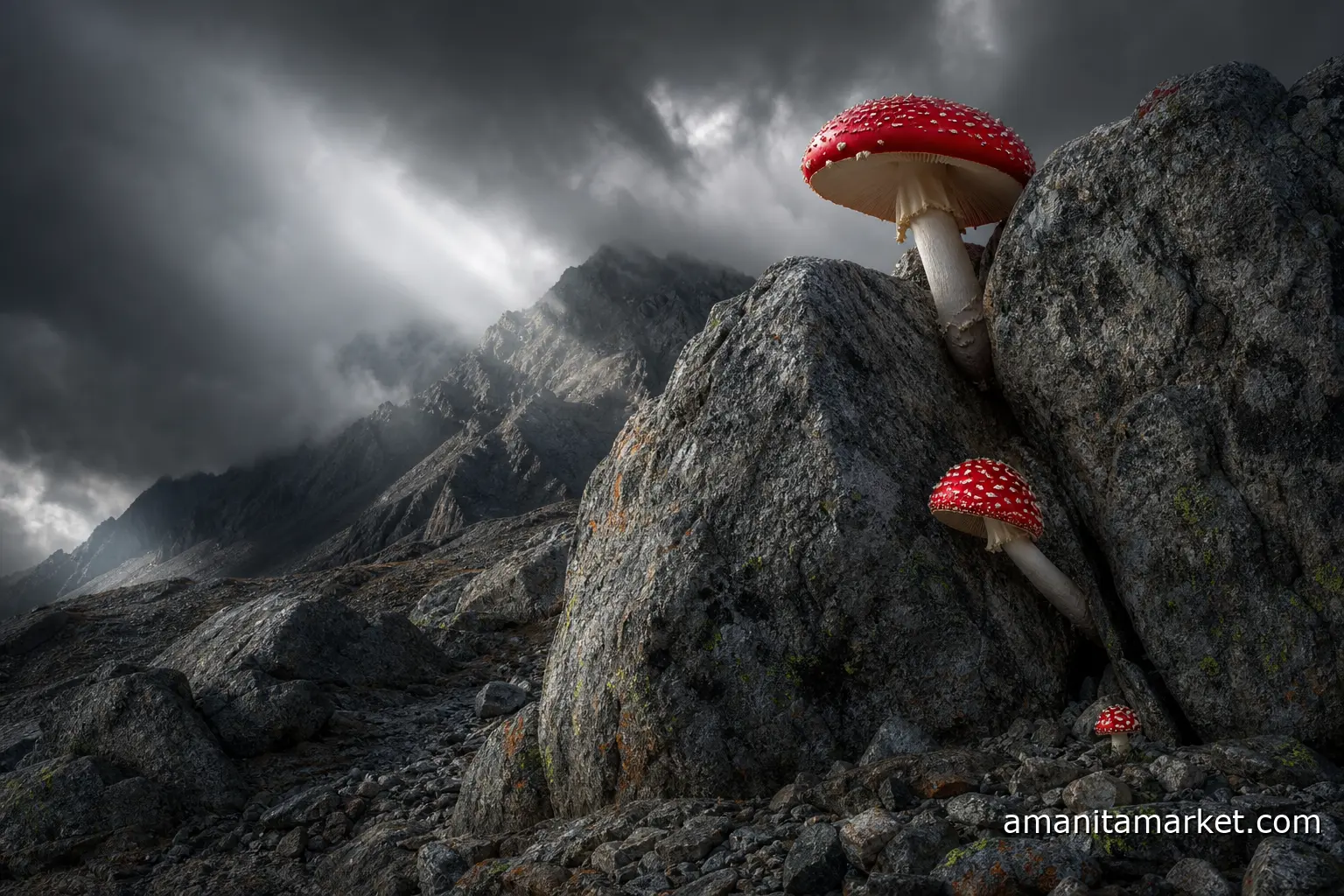
Among the most debated episodes in Norse military history, the berserker ritual stands apart. These warriors entered battle in a state described as trance-like fury — seemingly impervious to pain, roaring, biting their shields, performing feats beyond normal human capacity. What ritual preceded this state? New research and re-examination of primary sources suggests the berserker transformation was a carefully constructed ceremonial process, not spontaneous madness.
The Saga Descriptions: What the Sources Actually Say
The Old Norse sagas are the primary written source for berserker behaviour. In texts including Ynglinga saga, Hrólfs saga kraka, and Egils saga, berserkers are described consistently: they tremble and go pale before the frenzy begins, then enter a state of superhuman aggression in which they howl like wolves or bears, bite the edges of their shields, and appear indifferent to wounds. Afterward they collapse in exhaustion, sometimes lasting a day or more.
What the sagas do not describe explicitly is the ritual preparation for this state. The texts treat berserker ability as a gift — sometimes from Odin, sometimes inherited — rather than as a technique requiring preparation. This silence on preparation method has allowed competing theories to flourish, each arguing that the frenzy was induced by different means.
The berserkers were not a single category. Old Norse sources distinguish the bear-warrior (berserkr) from his wolf counterpart (úlfheðinn) — two related elite types bound to the cult of Odin:
| Feature | Berserkr | Úlfheðinn |
|---|---|---|
| Likely meaning | “Bear-shirt” | “Wolf-coat” |
| Totem animal | Bear | Wolf |
| Attested in | Ynglinga saga, Egils saga | Vatnsdæla saga, Torslunda plates |
| Cultic association | Odin’s elite warriors | Odin’s elite warriors |
In Norse cosmology the ritual donning of an animal skin was a form of shape-shifting: the warrior did not merely wear the pelt but took on the animal’s nature. The same transformation archetype appears in Siberian shamanism, where the practitioner also ritually becomes an animal — one of several threads linking the Norse warrior cult to wider northern Eurasian traditions.
The Ritual Framework: War as Sacred Act
Neil Price’s archaeological and textual analysis of Viking-Age warfare reveals that combat in this period was embedded in a rich ritual framework. Weapons were named, given personalities, and sacrificed. Battles were preceded by spá (prophetic divination). The battlefield itself was understood as Odin’s domain — a sacred space where the dead passed directly into the god’s service.
Within this framework, the berserker ritual was not an anomaly but a logical expression of the underlying cosmology: the warrior was not merely fighting but enacting a mythological role, becoming temporarily possessed by the spirit of the bear or wolf. The question of what pharmacological agent, if any, assisted this transformation sits alongside the psychological and ritual dimensions — it does not replace them.
The Plant Candidates: A Re-Examination
The pharmacological candidates for berserker induction have been debated since Ödman’s 1784 fly agaric hypothesis. Subsequent scholars have proposed henbane (Hyoscyamus niger), which produces genuine agitation and aggressive confusion and has been found in archaeological contexts associated with Norse ritual. A 2019 paper by Fatur in the Journal of Ethnopharmacology argued systematically for henbane over fly agaric on pharmacological grounds.
Both candidates have strengths and weaknesses. Fly agaric’s GABA-A agonism does not straightforwardly produce aggression — its primary action is inhibitory and sedative, more consistent with the post-frenzy collapse than with the frenzy itself. Henbane’s anticholinergic effects are more genuinely agitation-producing. But neither candidate has direct archaeological confirmation in a berserker context.
A Theory With a Long History
The fly agaric explanation is older than is often assumed. The Swedish theologian Samuel Ödman first proposed in 1784 that berserkers achieved their frenzy by eating Amanita muscaria, drawing an analogy with Siberian reindeer-herders. The idea was revived in 1956 by the American physician Howard Fabing in his paper “On Going Berserk,” which pointed to muscimol as the active agent.
Modern pharmacology has weakened the case. Muscimol’s action is inhibitory and sedative, which fits the exhausted collapse described after the frenzy far better than the frenzy itself. In a detailed 2021 study, the historian Roderick Dale argued that much of the popular berserker image — including the drug theory — derives from 17th-century and later embellishment rather than the medieval sources, and that the berserkr is better understood as an elite, high-status warrior than as a drugged madman.
What the Archaeology Shows
The material record offers images rather than chemistry. Vendel-era bronze matrices such as the Torslunda plates from Öland, Sweden depict warriors in animal guise — a figure in a wolf or bear pelt alongside a spear-bearing dancer — and similar motifs appear on helmet plates from Vendel and Valsgärde. These confirm that the animal-warrior idea was a real part of the culture’s self-image.
What the archaeology does not provide is any direct evidence of a specific intoxicant in a berserker context. No drug residue, preparation vessel, or botanical deposit has been securely tied to the frenzy. The pharmacological theories therefore remain inferences from later texts and from the plants available in the region, not conclusions drawn from physical proof.
The Psychological Dimension
Contemporary understanding of dissociative states, extreme ritual preparation, and self-induced altered consciousness has complicated the purely pharmacological model. Sports psychologists and anthropologists have documented that extreme ritual preparation — sleep deprivation, fasting, specific breathing techniques, intense musical stimulation, and deliberate cultivation of particular mental states — can produce dramatically altered behaviour without pharmacological assistance.
The berserker transformation may have been achieved through a combination of ritual, pharmacology, and intense psychological conditioning over years of training. The warriors described in the sagas were specialists — members of specific warrior brotherhoods with their own rituals and traditions. Their ability to enter the berserker state was likely the product of systematic training as much as any single substance. The dried Baltic fly agaric we offer still grows in the same northern forests the sagas describe. For the broader question of Viking fly agaric use, see our article on did Vikings use fly agaric?
Did Viking berserkers use fly agaric mushrooms?
There is no firm evidence. The theory dates to Samuel Ödman in 1784 and was revived by Howard Fabing in 1956, but fly agaric’s sedative, GABA-acting pharmacology is a poor match for battle frenzy. A 2019 study by Karsten Fatur argued henbane was a more plausible candidate, while recent historians stress ritual and social explanations over any single drug.
What does the word “berserker” mean?
It most likely comes from the Old Norse berserkr, usually read as “bear-shirt” — a warrior in a bear pelt. The closely related úlfheðnar were “wolf-coats.” Both were elite fighters associated with the god Odin.
Were berserkers actually drugged?
Possibly, but it is unproven. Modern scholarship — notably Roderick Dale’s 2021 study — leans toward ritual preparation, long training, psychology and social status rather than a single intoxicant. The drug theories remain plausible speculation, not established fact.
Sources
- Fatur, 2019 — Sagas of the Solanaceae: a systematic review of botanical candidates for berserker rage (Journal of Ethnopharmacology, PubMed)
- Roderick Dale (2021) — The Myths and Realities of the Viking Berserkr, Routledge
- Jenny Wade (2022) — Going Berserk, Running Amok, and the Invulnerability of Battle Trance, International Journal of Transpersonal Studies
- Wikipedia — Berserker: sources, ritual context and scholarly theories
- Wikipedia — Úlfheðnar: wolf-warrior tradition in Norse culture
- Wikipedia — Neil Price: Viking-Age ritual and warfare research
Explore premium dried fly agaric from the Baltic forests — the same northern landscape where Norse warriors and shamans shaped their world. Wild-harvested Amanita muscaria.