
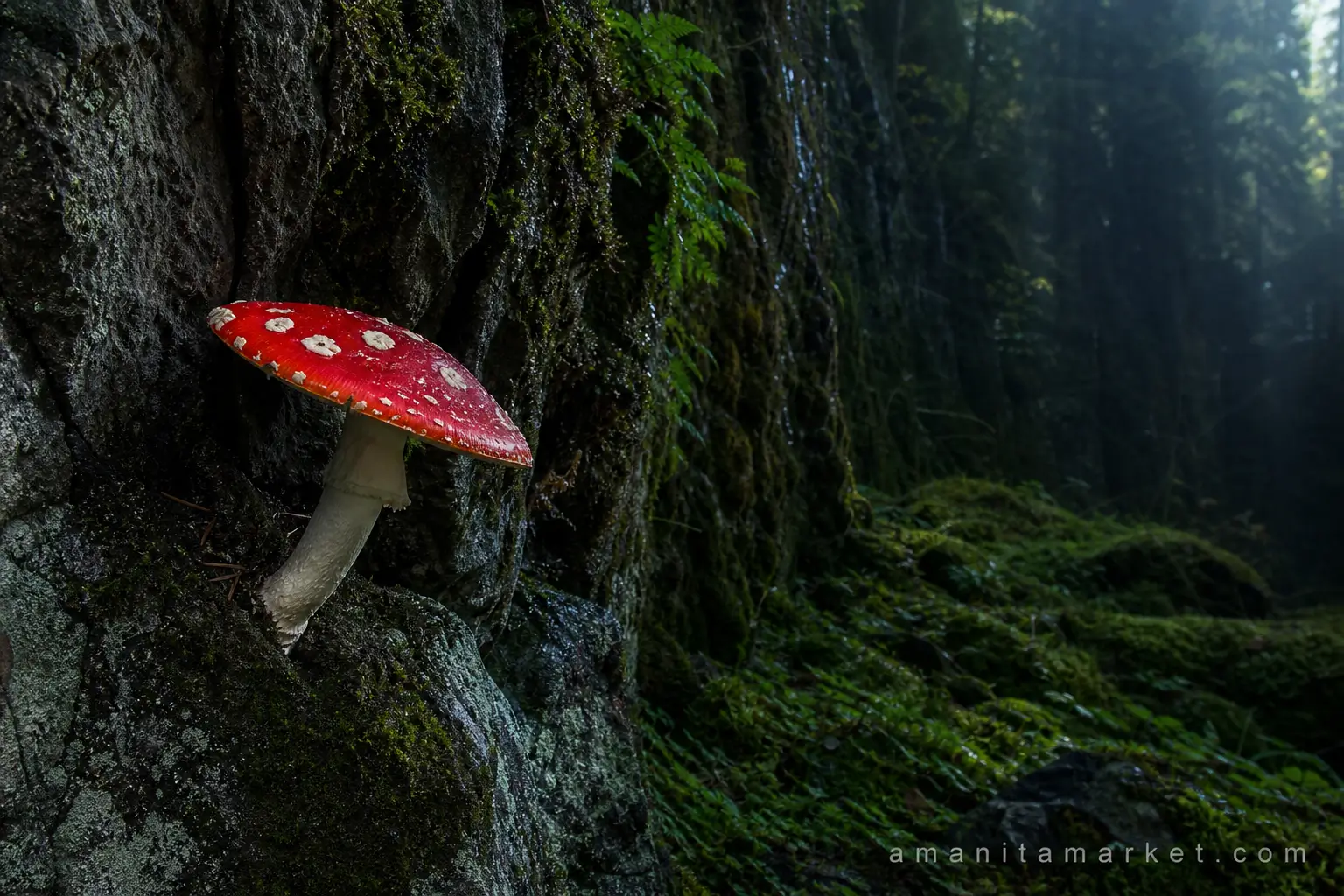
The Sami — the indigenous people of northern Scandinavia and the Kola Peninsula — are among the most extensively studied shamanic cultures in the world. Their spiritual practitioners, the noaidi, occupied a role closely parallel to the Siberian shaman. And given the Sami’s geographic proximity to both Siberia and the birch-pine forests where Amanita muscaria grows in abundance, the question of whether fly agaric played a role in Sami spiritual practice is one of the most persistently debated in European ethnobotany.
The Noaidi: Sami Spiritual Specialist
The noaidi (also spelled noajdi or nåejttie depending on dialect) was the Sami equivalent of the Siberian shaman — a spiritual specialist who could enter altered states of consciousness, communicate with the spirit world, perform healing, and navigate between the realms of the living and the dead. The noaidi used a ritual drum (goavddis or runebomme) to induce trance, striking it rhythmically while chanting joik — the distinctive Sami vocal tradition.
Christian missionaries who encountered the Sami from the 17th century onward documented the noaidi’s practices with a mixture of horror and fascination. These accounts, preserved in mission records and later historical analyses, provide the primary written evidence for Sami shamanism. The drums themselves — many of which were confiscated and destroyed by missionaries — survive in museum collections in Norway, Sweden, and Denmark.
The Sami ritual drum was not merely a percussion instrument but a cosmological map — its surface painted with symbols representing the three worlds (upper, middle, lower), the spirit helpers, and the routes between them. Striking it while chanting joik was the primary technique for inducing the shamanic trance state. Whether botanical allies supplemented this practice remains debated.
The Evidence Question: Fly Agaric and Sami Practice
The question of whether Sami noaidi used Amanita muscaria is contentious precisely because the evidence is incomplete. The case for use rests on several arguments: geographic proximity to Siberian traditions where fly agaric use is well documented; the abundance of the mushroom throughout the Sami homeland (northern Scandinavia and the Kola Peninsula); structural parallels between Sami and Siberian shamanism that suggest shared cultural heritage; and historical accounts of Sami ritual that describe states consistent with Amanita muscaria intoxication.
The case against is more methodological: no Sami-language source explicitly names fly agaric as a ritual substance, and the missionary accounts that do describe Sami ceremonies are not consistent in their descriptions of botanical elements. Some researchers argue that the Sami trance was achieved exclusively through drumming and joik, without botanical assistance — a position supported by the richness and power of these techniques as trance-induction methods in their own right.
Reindeer and the Mushroom: A Cultural Bridge
The most compelling indirect evidence comes from the Sami relationship with reindeer and the documented behaviour of reindeer toward Amanita muscaria. Sami reindeer herders — the central economic and cultural activity of traditional Sami life — were intimately familiar with their animals’ behaviour. Reindeer actively seek out and consume fly agaric when it is available, apparently attracted by the mushroom’s chemical properties.
This was not merely observed in passing. Sami herders were attentive to reindeer behaviour as a source of information about the landscape, weather, and available food sources. A reindeer herd that had consumed fly agaric exhibited distinctive behaviour — erratic movement, apparent disorientation, unusual vocalisation — that would have been immediately recognisable. Whether this observation led to ceremonial use by the noaidi, as some researchers have proposed, cannot be confirmed but cannot be ruled out.
Sami Cosmology and the Forest
Sami cosmology was structured around a three-world model — Aibmo (upper world), Jábmiidáibmu (realm of the dead), and the living world — connected by a world tree or cosmic pillar. The noaidi’s drum served as the vehicle for journeys between these realms. The living world itself was understood as inhabited by spirit beings — sieidi (sacred stones and natural objects), animal spirits, and the spirits of the landscape.
In this context, the most visually striking organism in the autumn forest — the red-and-white fly agaric — would naturally attract spiritual attention. Whether it was incorporated into formal noaidi practice or remained in the realm of folk observation and popular belief, it was not invisible. The Sami were among Europe’s most attentive observers of the natural world, and Amanita muscaria does not permit inattention.
The Sami Tradition in Context
The Sami shamanic tradition represents one branch of a circumpolar cultural complex that spans the entire Arctic and sub-Arctic zone from Lapland to Alaska. The structural similarities between Sami, Siberian, and some North American indigenous shamanic traditions suggest a common ancestral framework dating back thousands of years. Within this framework, Amanita muscaria played a documented role in the Siberian branches — and the question of the Sami branch remains open.
For the Siberian context that forms the core of documented fly agaric shamanism, see our article on Amanita muscaria and Siberian shamanism. For the wider European cultural picture, see fly agaric in world cultures.
Sources
Your source for Baltic fly agaric — premium dried amanita muscaria, wild-harvested and available in our shop now.