
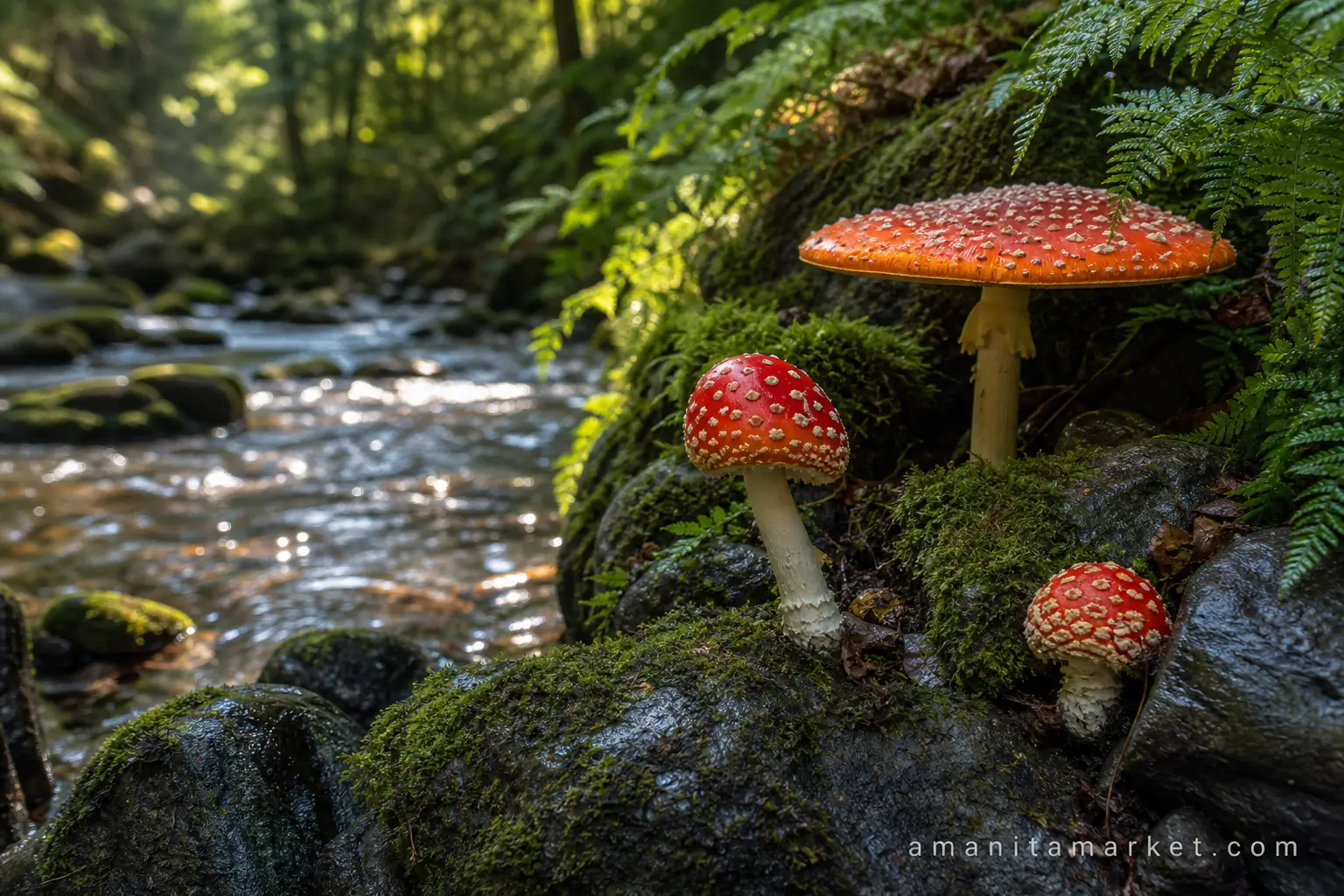
In 2022, the German Mycological Society — Deutsche Gesellschaft für Mykologie (DGfM) — declared Amanita muscaria the Pilz des Jahres: Mushroom of the Year. It was not the first time the fly agaric had received this designation. The choice drew attention to a species that, despite its worldwide recognition, is frequently misunderstood. The story behind the designation is a useful window into contemporary European mycology’s relationship with its most iconic species.
The Pilz des Jahres Tradition
The German Mycological Society has designated a Mushroom of the Year annually since 1994. The selection is made by the society’s advisory board and is intended to draw public attention to a species that is either ecologically significant, culturally important, or widely misunderstood. Previous designations have included species ranging from the economically important truffle to obscure woodland species that most people would never recognise.
The selection of Amanita muscaria for 2022 was unusual in that it chose a species universally known rather than obscure — but the DGfM’s reasoning was precisely that widespread recognition does not equal understanding. Despite being one of the most depicted fungi in the world, the fly agaric is surrounded by persistent myths, misinformation, and misidentification that the designation was intended to address.
The DGfM’s stated reasons for the 2022 designation included: (1) correcting the widespread myth that the mushroom is deadly — it is rarely fatal and its toxicological profile differs significantly from truly deadly species like Amanita phalloides; (2) highlighting its ecological importance as a mycorrhizal species; (3) drawing attention to its extraordinary cultural history; and (4) addressing the growing commercial market for fly agaric products, which required greater public understanding of the species.
Correcting the Deadly Mushroom Myth
One of the most persistent and damaging myths about Amanita muscaria is that it is a deadly poisonous mushroom responsible for many fatalities. This is not supported by the toxicological record. While Amanita muscaria can cause serious intoxication — characterised by muscimol and ibotenic acid effects — documented fatalities attributed specifically to fly agaric are extremely rare in the historical and medical literature.
The confusion arises partly from conflation with the truly deadly members of the Amanita genus — particularly Amanita phalloides (death cap) and Amanita virosa (destroying angel), which contain amatoxins that cause fatal liver failure days after ingestion. These species bear no resemblance to Amanita muscaria in appearance, and their toxins are entirely different in chemistry and mechanism. The DGfM used the 2022 designation to explicitly address this confusion in public communications.
Ecological Significance
The DGfM’s designation also highlighted Amanita muscaria’s ecological role — one that is easy to overlook when the mushroom is seen as simply a toxic species. As a keystone mycorrhizal partner for birch, pine, and spruce across the entire Northern Hemisphere temperate and boreal zones, fly agaric contributes to the health of forest ecosystems at a scale that few other species can match.
The mycelial networks connecting fly agaric to its host trees are part of the broader mycorrhizal web that underlies forest nutrient cycling and tree-to-tree communication. Forests without healthy mycorrhizal communities are less resilient to stress, drought, and disease. Amanita muscaria is not peripheral to this system — it is one of its most widespread and important participants. For the full ecological account, see our article on fly agaric mycorrhiza and ecology.
Cultural Heritage Recognition
The 2022 Mushroom of the Year designation also served as an acknowledgement of Amanita muscaria’s extraordinary cultural history — from Siberian shamanism through the Vedic Soma debate to the Christmas tradition and the European Glückspilz. The DGfM recognised that this is a species whose significance extends well beyond mycology into anthropology, ethnobotany, and cultural history.
For a German scientific society to make this acknowledgement in 2022 was notable given the contemporary growth of interest in Amanita muscaria as an ethnobotanical product. The designation implicitly validated the cultural and historical dimensions of the mushroom — the same dimensions that underlie the contemporary market for dried fly agaric as a collector’s and ethnobotanical product.
The Contemporary Market Context
The DGfM’s 2022 selection coincided with a period of significant growth in the European market for dried Amanita muscaria products. Increased interest in traditional ethnobotany, growing awareness of the mushroom’s cultural history, and expanded online retail had all contributed to rising demand. The Mushroom of the Year designation brought additional journalistic attention to the species, further raising public awareness.
This context made the DGfM’s emphasis on accurate information particularly timely. The society’s public communications around the 2022 designation were notably balanced — acknowledging the mushroom’s cultural significance and commercial presence while providing accurate botanical, toxicological, and ecological information. Our own guide to Amanita muscaria covers similar ground in English for an international audience.
Previous DGfM Designations and What They Tell Us
The choice of Amanita muscaria continues a tradition of DGfM designations that have mixed ecological, educational, and cultural criteria. The society’s willingness to choose a well-known species reflects a maturation of the Mushroom of the Year concept — moving from purely “discover this obscure species” toward “understand this famous one properly.” It signals that scientific societies increasingly recognise that public mycological literacy requires not just the introduction of unknown species but a deeper engagement with the most familiar ones.
Sources
- Deutsche Gesellschaft für Mykologie (DGfM) — Pilz des Jahres 2022 official designation
- Wikipedia — Amanita phalloides: death cap — key species confused with fly agaric
- Wikipedia — Amatoxin: lethal compounds in truly deadly Amanita species
- Woodland Trust — Fly Agaric: toxicology clarification and ecology
Explore our amanita muscaria powder range — 250g of premium wild-harvested Baltic fly agaric, dried and vacuum-sealed for collectors and enthusiasts.