
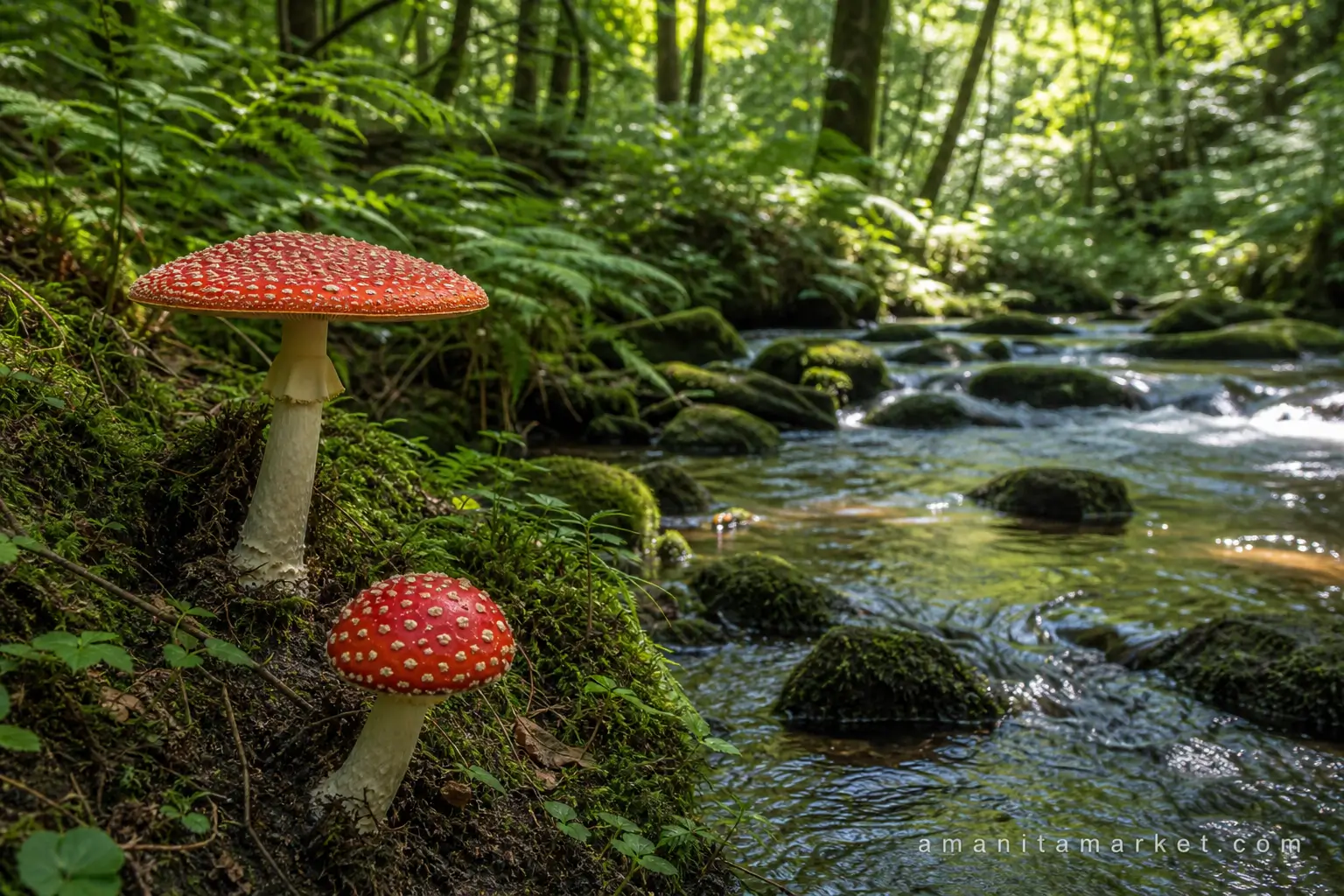
Amanita muscaria occupies a unique position in the world of botanical products. It is not a herb, not a spice, not a supplement — it is something older and harder to categorise: a mushroom with one of the longest documented relationships with human culture of any natural object on Earth. Understanding what kind of product it is, why it is sold and purchased, and what that means in practice is the foundation for any serious engagement with fly agaric as a collected botanical.
What Is an Ethnobotanical Product?
Ethnobotany is the study of how human cultures use, understand, and relate to the plant and fungal world. An ethnobotanical product is one sold primarily on the basis of its cultural and historical significance — its deep roots in traditional, ritual, or folk use — rather than as a food, medicine, or supplement. The category includes frankincense and myrrh (ritual resins), palo santo and sandalwood (sacred woods), sage and mugwort (ceremony herbs), and — among fungi — Amanita muscaria.
What distinguishes an ethnobotanical product from other botanical categories is the primacy of cultural meaning. People purchase frankincense not primarily for its chemical profile but because of what it has meant to human communities across millennia. The same logic applies to dried fly agaric: its cultural history — thousands of years of use in Siberian shamanism, European folk tradition, and ritual incense practice — is the product’s primary identity.
Where Amanita Muscaria Sits Among Ethnobotanicals
Placing fly agaric alongside the other classic ethnobotanicals shows what it shares with them — and what makes it distinctive as the category’s only mainstream fungus.
| Product | Category | Primary cultural basis |
|---|---|---|
| Frankincense / Myrrh | ritual resin | religious ceremony |
| Palo santo / Sandalwood | sacred wood | purification ritual |
| Sage / Mugwort | ceremony herb | folk & smudging |
| Amanita muscaria | ethnobotanical fungus | Siberian shamanism + European folk |
The Cultural Basis: A Three-Strand History
Amanita muscaria’s credentials as an ethnobotanical product rest on three well-documented cultural strands. The first and deepest is Siberian shamanism: the documented use of dried fly agaric in winter solstice ceremonies by Koryak, Evenki, Yakut, and related peoples, extending back at least several centuries in the ethnographic record and almost certainly much further. This tradition represents the most extensively documented case of ritual fungal use in human history.
The second strand is European folk tradition: the Glückspilz luck symbol, the Rauhnächte incense ceremonies of the Alpine zone, the fairy tale iconography of Northern and Central Europe, and the midwinter symbolism that connects the mushroom to Christmas tradition across the continent. This strand is less dramatic than the Siberian shamanic use but broader in its geographic distribution and more directly relevant to the contemporary European market.
The third strand is incense tradition: the use of dried fly agaric caps placed on hot charcoal or heated stones to produce aromatic smoke in ritual and atmospheric contexts. This use is documented in multiple cultural traditions and represents the most practical and direct connection between the historical record and contemporary ethnobotanical use. For the incense history in detail, see our article on fly agaric incense history.
Quality in the Ethnobotanical Context
For an ethnobotanical product, quality means authenticity and care in production — not pharmaceutical standardisation. The indicators of quality in dried Amanita muscaria are those that experienced foragers and collectors have used for generations: the right colour (warm ochre-red, not over-dried black), the right aroma (mild, earthy, mushroomy), the right texture (dry and firm, not brittle or soft), and clear provenance (Baltic or Northern European wild harvest, caps only).
The Baltic states — Lithuania, Latvia, and Estonia — are the source of the finest wild fly agaric in Europe. The region’s extensive birch and pine forests, clean soils, and tradition of careful wild harvesting produce mushrooms of exceptional visual and aromatic quality. Our products are sourced from this region, harvested at peak maturity, dried at controlled low temperatures, and vacuum-sealed to preserve quality through shipping and storage. For a detailed guide to assessing quality, see our fly agaric powder buyer’s guide.
How Dried Fly Agaric Is Used Today
Contemporary buyers of dried Amanita muscaria use it in several ways consistent with its ethnobotanical positioning. As incense — placed on charcoal or heated stones — it produces an earthy, distinctive aromatic smoke associated with the seasonal and ceremonial traditions documented in its cultural history. As a collector’s botanical — displayed in its dried cap form — it serves as a tangible connection to a remarkable cultural heritage. As a study specimen — for those interested in mycology, ethnobotany, or natural history — it is one of the most significant and accessible objects in the field.
In all of these uses, the product is positioned and sold as an ethnobotanical material: a botanical with deep cultural roots, not a food, supplement, or medicine. This positioning is both legally appropriate — dried fly agaric is not classified as a controlled substance in most EU countries — and factually accurate, reflecting the genuine nature of the product and its history.
Completing the Picture
Amanita muscaria as an ethnobotanical product is the sum of everything documented in this blog: its biology and ecology, its active compounds and their research context, its role in Siberian shamanism and world mythologies, its presence in European folklore and pop culture, and its practical characteristics as a dried botanical. No other product in the contemporary market brings together this combination of scientific interest, cultural depth, and visual immediacy.
For the complete overview of the species, see our hub article on what is Amanita muscaria. To explore the full range of wild-harvested dried fly agaric — from 50g to 500g, shipped across Europe — you can buy Amanita muscaria powder directly.
Frequently Asked Questions
Is Amanita muscaria legal to buy as an ethnobotanical product?
In most EU countries dried fly agaric is not a controlled substance and is sold legally as an ethnobotanical and incense material. Rules vary by country, so check local regulations.
How is dried fly agaric used today?
Most commonly as incense (on charcoal or a heated stone), as a collector’s botanical, and as a study specimen for mycology and ethnobotany.
What makes Baltic fly agaric high quality?
Clean birch and pine forests, careful wild harvesting at peak maturity, low-temperature drying, and vacuum-sealing that preserves colour and aroma.
Sources
- Wikipedia — Ethnobotany: the field and its approach to traditional botanical products
- Wikipedia — Ethnomycology: the study of human-fungal cultural relationships
- Rätsch, C. (2005): The Encyclopedia of Psychoactive Plants. Park Street Press.
- Wikipedia — Incense: historical and contemporary ethnobotanical use of aromatic botanicals
- Wikipedia — Amanita muscaria: complete cultural, chemical and ecological overview
Explore our full range of dried amanita muscaria — wild-harvested Baltic fly agaric in sizes from 50g to 500g. Vacuum-sealed, fast EU shipping, no additives.