
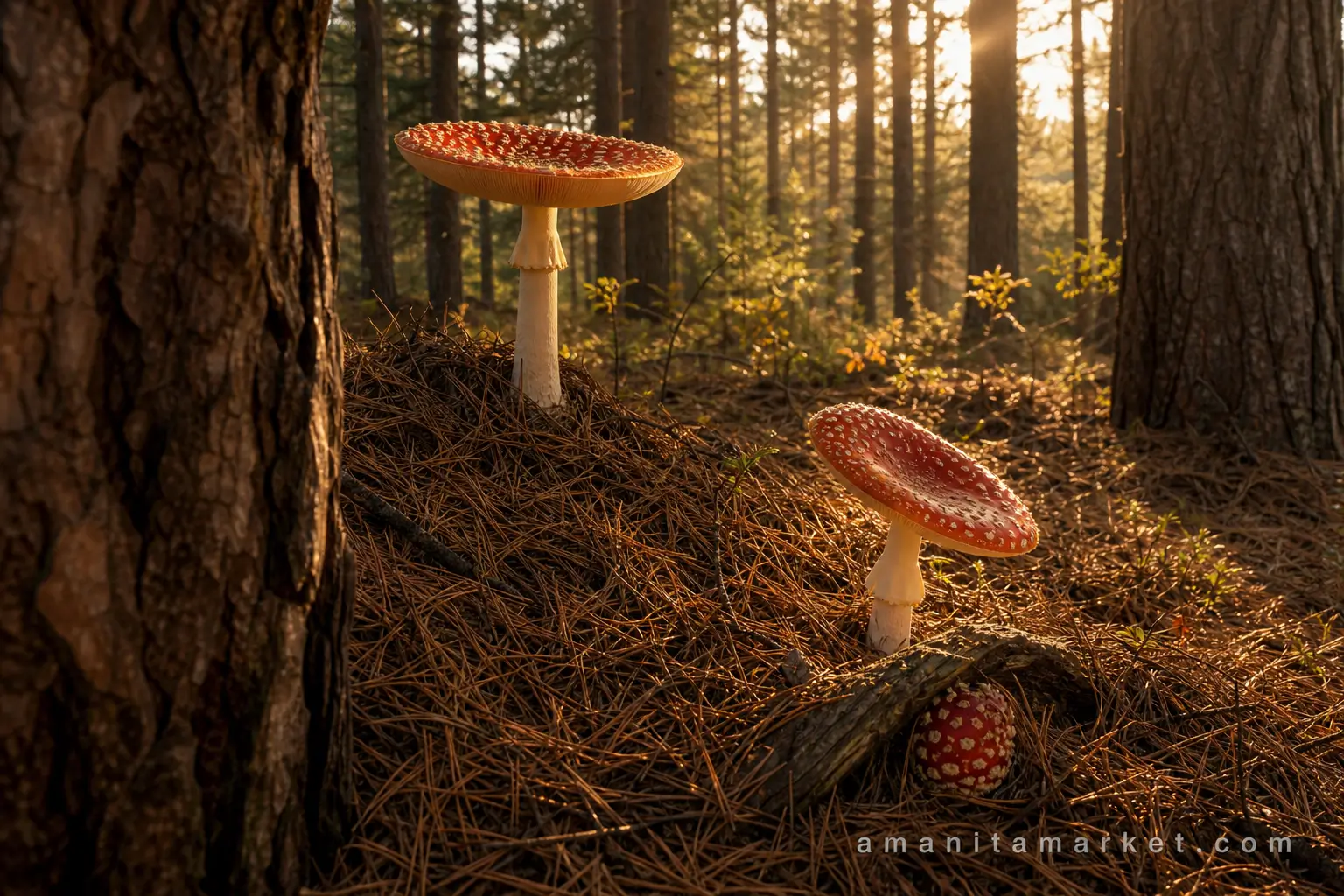
The shamanic use of Amanita muscaria is not a single practice but a family of related practices that developed across dozens of cultures over thousands of years. While the Siberian traditions are the most extensively documented, the ritual framework — the specific ways in which shamans worked with fly agaric in ceremony — shows both remarkable consistency across cultures and meaningful variation that reflects local cosmologies. Understanding these rituals is essential to understanding why the mushroom has carried such cultural weight across human history.
The Shamanic Role: Who Used Fly Agaric and Why
In the cultures where Amanita muscaria use is most clearly documented — the Koryak, Evenki, Chukchi, and related peoples of northeastern Siberia — the mushroom was not used recreationally or casually. It was a tool of the specialist: the shaman, whose role was to enter altered states of consciousness on behalf of the community, navigate the spirit world, diagnose illness, retrieve lost souls, and communicate with the forces governing the natural and social world.
The use of fly agaric was embedded in a comprehensive ritual framework that included preparation, intention, specific ceremonial protocols, and post-experience integration. The shaman was trained over years — often following an initiatory illness or crisis that marked them as selected for the role — in how to work with the mushroom safely and purposefully. Access was typically restricted to the shaman and select participants; casual use was not the norm in documented traditions.
Three Worlds, One Practitioner
Siberian shamanic cosmology typically described a three-world structure, with the shaman maintaining communication between them on behalf of the community. The birch tree — the mushroom’s host — served as the physical axis mundi, the ladder connecting the worlds.
| World | Access route | Domain |
|---|---|---|
| Upper world | sky / world tree | celestial spirits |
| Middle world | ordinary reality | the human realm |
| Lower world | downward via roots | the dead & ancestral spirits |
The Ceremony: Structure and Protocol
Shamanic ceremonies involving Amanita muscaria followed specific structural patterns documented by ethnographers from the 18th century onward. The ceremony typically took place in winter — consistent with the mushroom’s autumn harvest and traditional drying period — inside the yurt or lodge, around the central fire. The shaman wore specific garments, often red or white, and carried the ritual drum whose rhythmic beating was central to inducing and maintaining the trance state.
Before the ceremony, the shaman spent time in preparatory fasting, meditation, and sometimes isolation. The dried mushrooms — consumed alone or prepared as a drink — were taken in a ceremonial context accompanied by drumming and chanting. The shaman’s role during the trance was not passive: they were expected to maintain purposeful direction, to navigate the spirit landscape with intention, and to return with specific information or to perform specific tasks for the community.
The Reindeer Dimension
One of the most distinctive elements of the Siberian fly agaric tradition is its connection to reindeer — an animal of central economic and spiritual importance to the cultures involved. Reindeer are known to actively seek out and consume Amanita muscaria when available, and ethnographic accounts document shamans observing this behaviour and interpreting it as confirmation of the mushroom’s power.
Some accounts describe the collection of urine from reindeer that had consumed fly agaric, as muscimol passes through the body in active form. This practice has been interpreted as a practical adaptation to maximise available material, and has also been proposed as the origin of the “flying reindeer” motif associated with the Christmas tradition — explored in our article on Amanita muscaria and Santa Claus. Whether literal or metaphorical, the reindeer-mushroom connection is documented clearly enough to be taken seriously as an element of the ritual ecology.
The Mushroom as Teacher, Not Tool
In the cultural frameworks where fly agaric shamanism is documented, the mushroom was not understood as a mere pharmacological tool but as a living spiritual entity in its own right — a teacher, guide, or ally that could be approached with respect and worked with purposefully. This framework is common to many indigenous psychoactive plant traditions worldwide and reflects a fundamentally different relationship with psychoactive substances than the modern Western pharmacological model.
R. Gordon Wasson, who had direct contact with practitioners during his fieldwork in the 1950s and 1960s, documented this relational understanding clearly. The mushroom had personality, volition, and authority that had to be respected — it could teach or mislead, illuminate or confuse, depending on the approach taken. This is not a pharmacological concept; it is a cosmological one.
Regional Variations Across Siberia
While the core structural features of fly agaric shamanism show remarkable consistency across Siberian cultures, meaningful variations reflect local cosmologies and ecological contexts. Among the Koryak, documented use was primarily by shamans for healing and spirit work. Among some groups, broader community participation occurred at specific festivals. Preparation methods varied — some consumed caps directly, others prepared tea, some used reindeer urine as a prepared form.
These variations are not inconsistencies — they demonstrate that fly agaric shamanism was a living tradition that adapted to local conditions while maintaining structural coherence. The consistency of the core elements across geographically separated cultures makes this one of the most compelling bodies of evidence for the antiquity of Amanita muscaria’s role in human spiritual practice. For the complete picture, see our article on Amanita muscaria and Siberian shamanism, and on how the tradition connects to broader fly agaric in world cultures.
Frequently Asked Questions
Who used fly agaric in shamanic rituals?
Trained shaman-specialists among Siberian peoples such as the Koryak, Evenki and Chukchi — not the wider community, in most documented traditions.
What role did the drum play?
Rhythmic drumming was central to inducing and sustaining the trance state during the ceremony.
Why are reindeer linked to fly agaric?
Reindeer actively seek the mushroom; some accounts describe shamans using their urine as a prepared form, and the link is tied to the “flying reindeer” motif.
Sources
- Roczniki Kulturoznawcze 2022 — Koryak Amanita muscaria rituals and shamanism (academic journal)
- Wasson, R.G. (1968): Soma: Divine Mushroom of Immortality. Harcourt Brace.
- Wikipedia — Shamanism in Siberia: ritual structure, three worlds and ceremonial use
- Wikipedia — Koryak people: fly agaric ceremony documentation
- Wikipedia — Shamanic drum: ritual instrument and trance induction
Dried fly agaric from the Baltic — the same forests where this tradition has its deepest roots. Hand-picked, carefully dried, and available in several sizes for collectors.