
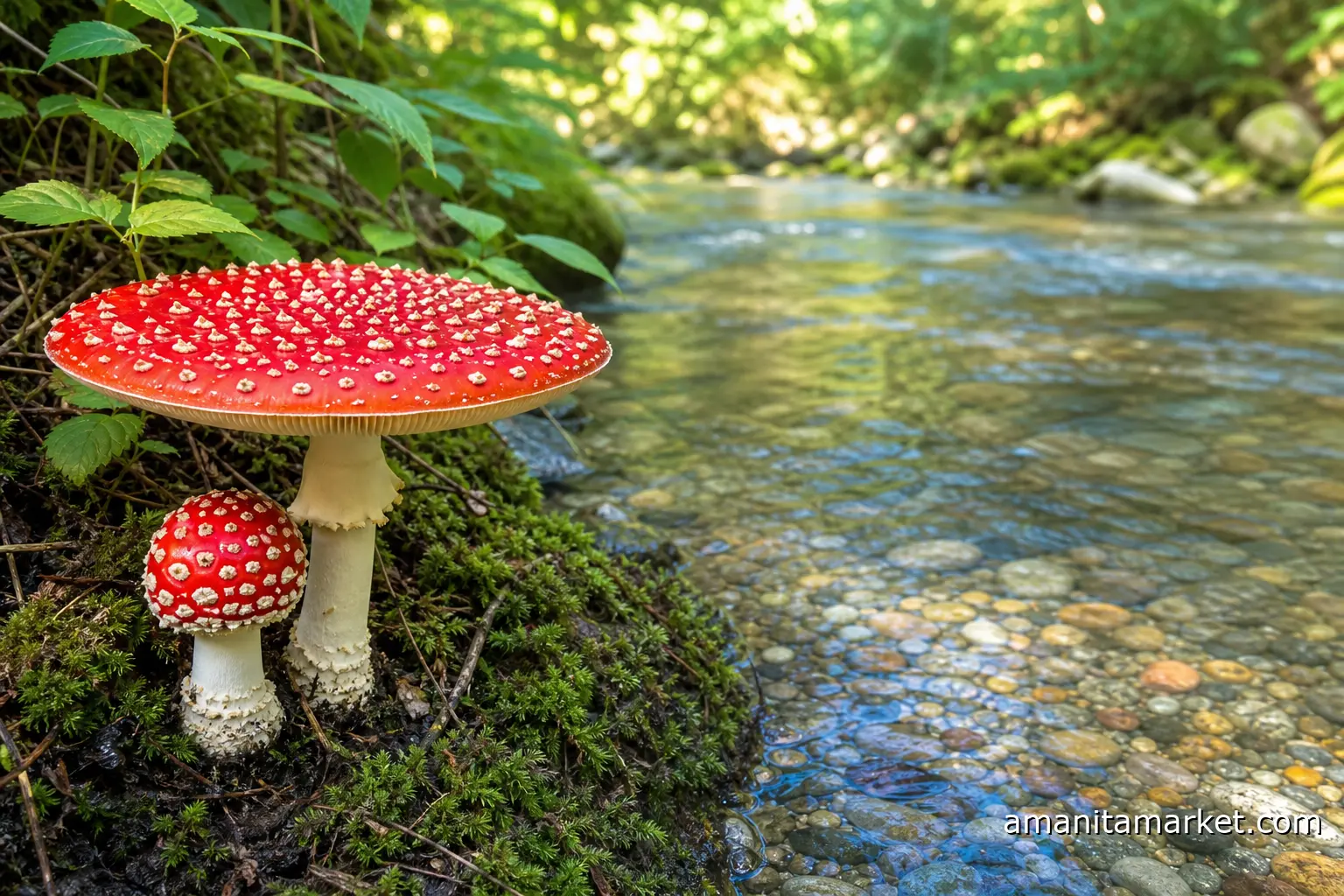
The phrase “magic mushroom” is used so loosely in popular culture that it has become genuinely confusing. In scientific and regulatory language, “magic mushroom” refers specifically to psilocybin-containing fungi — primarily Psilocybe cubensis and related species. Amanita muscaria is not a magic mushroom in this sense. Understanding why this distinction matters — legally, pharmacologically, and practically — is essential for anyone researching fly agaric.
What “Magic Mushroom” Actually Means
The term “magic mushroom” entered English language in the late 1950s following R. Gordon Wasson’s 1957 Life magazine article about his experiences with psilocybin mushrooms in Oaxaca, Mexico. From that point onward, the phrase became shorthand in popular culture for psilocybin-containing fungi — the class of mushrooms that produce classic psychedelic effects through serotonin 5-HT2A receptor activation.
In regulatory and scientific language, “magic mushroom” consistently refers to Psilocybe species and related genera containing psilocybin and psilocin. These compounds are Schedule I controlled substances under the 1971 UN Convention on Psychotropic Substances, making psilocybin mushrooms controlled in virtually every country that has ratified the convention.
Why Amanita Muscaria Is Not a Magic Mushroom
Amanita muscaria does not contain psilocybin or psilocin. Its active compounds — muscimol and ibotenic acid — are chemically unrelated to the tryptamine family and work through entirely different neurotransmitter pathways. Psilocybin acts on serotonin receptors; muscimol acts on GABA-A receptors. These are fundamentally different systems producing fundamentally different effects.
Neither muscimol nor ibotenic acid appears on the UN Convention schedules. They are not controlled substances in Germany, Austria, the Netherlands, or most EU member states. Fly agaric is legal to possess and sell in these countries, while psilocybin mushrooms are not. This is not a technicality — it reflects a genuine difference in how regulatory bodies have assessed the two substances.
| Feature | Amanita muscaria | Psilocybe mushrooms |
|---|---|---|
| Active compounds | Muscimol / Ibotenic acid | Psilocybin / Psilocin |
| Receptor target | GABA-A (inhibitory) | 5-HT2A serotonin |
| EU legal status | ✓ Legal in most EU countries | ✗ Controlled substance |
| UN Convention | ✓ Not scheduled | ✗ Schedule I (1971) |
| Effect profile | Sedative, dissociative | Classic psychedelic |
| “Magic mushroom” | ✗ Not by definition | ✓ By definition |
Why the Confusion Matters in Practice
The conflation of Amanita muscaria with “magic mushrooms” creates real, practical problems. It misleads buyers about the mushroom’s legal status — some people assume fly agaric is illegal because they associate it with controlled psilocybin mushrooms, and others wrongly assume that because fly agaric is legal, psilocybin must be too. It also misleads about the pharmacological profile: someone expecting a classic psychedelic experience from fly agaric will encounter a very different substance than they anticipated. Accurate information serves buyers, sellers, and regulators equally.
The Wasson Connection: How the Confusion Started
The conflation has roots in the work of R. Gordon Wasson himself. Wasson researched both Amanita muscaria (as the proposed Vedic Soma) and psilocybin mushrooms (through his 1957 Mexico fieldwork), and his writing influenced how both mushrooms entered Western cultural consciousness simultaneously in the late 1950s and 1960s. For readers unfamiliar with mycological distinctions, both mushrooms appeared in the same cultural conversation about psychoactive fungi — and the distinction between them was easily lost.
The counterculture of the 1960s further blurred the line by treating all psychoactive fungi as part of the same cultural phenomenon. Fly agaric imagery — the red cap and white spots — became a visual shorthand for altered states and psychedelic experience regardless of the specific pharmacology involved. This visual association persists today and continues to generate confusion.
What the Effects Actually Are
Because the receptor targets differ, the experiences differ completely. Psilocybin, acting on 5-HT2A serotonin receptors, produces the classic psychedelic profile: visual distortion, altered thought patterns, and emotional intensity. Muscimol, acting on GABA-A receptors — the brain’s main inhibitory system — produces something closer to a sedative, dreamlike, or dissociative state, frequently described as drowsiness, vivid dreams, and a sense of detachment rather than the vivid hallucinatory experience associated with psychedelics.
This is also why fly agaric is sometimes grouped with deliriants and dissociatives rather than psychedelics. Raw fly agaric additionally contains ibotenic acid, which is more toxic than muscimol and is the main reason traditional preparation methods (drying and decarboxylation) exist — they convert a portion of ibotenic acid into the milder muscimol. None of this makes the mushroom a “magic mushroom”; it makes it a pharmacologically distinct class of its own.
Amanita Muscaria’s Actual Cultural Identity
The fly agaric’s genuine cultural identity is actually richer and more interesting than the “magic mushroom” framing suggests. Its history spans Siberian shamanism, Vedic religion, Nordic mythology, European folklore, and Christmas symbolism — a cultural footprint that far exceeds that of psilocybin mushrooms, which have a primarily Mesoamerican and contemporary Western cultural history. The fly agaric deserves to be understood on its own terms, not as a footnote to the psilocybin story.
For the full overview of what Amanita muscaria actually is, see our guide to what is Amanita muscaria. For the detailed pharmacological comparison, see our article on fly agaric vs psilocybin.
Why the Distinction Matters When Buying
For buyers, the takeaway is simple: fly agaric and psilocybin mushrooms are different products with different legal standing, and they should be sourced accordingly. Because Amanita muscaria is not a controlled substance in most of the EU, it can be bought and sold openly as a dried botanical, incense material, or collector’s specimen — something that is simply not true of psilocybin fungi. That said, legal status varies by country and can change, so it is always worth checking your own local regulations before ordering.
If you are looking for the genuine article, our fly agaric powder is wild-harvested and traditionally dried from Baltic forests — sold transparently as what it is, with none of the “magic mushroom” confusion.
Frequently Asked Questions
Does fly agaric contain psilocybin?
No. Amanita muscaria contains muscimol and ibotenic acid, not psilocybin or psilocin. It is chemically and pharmacologically unrelated to psilocybin mushrooms.
Is fly agaric legal if magic mushrooms are not?
In most EU countries, yes — fly agaric is not a scheduled substance, while psilocybin mushrooms are controlled under the 1971 UN Convention. However, laws differ between countries and can change, so check your local regulations before buying.
Does fly agaric cause a psychedelic trip?
Not in the classic sense. Its muscimol-driven effects are sedative, dreamlike, and dissociative rather than the serotonin-based psychedelic experience produced by psilocybin.
Sources
- Wikipedia — Psilocybin mushroom: definition, taxonomy and legal status
- Wikipedia — 1971 Convention on Psychotropic Substances: psilocybin scheduling
- Michelot & Melendez-Howell (2003) — Amanita muscaria: muscimol, ibotenic acid and GABAergic pharmacology (Mycological Research)
- Wikipedia — Amanita muscaria: legal status and distinction from psilocybin mushrooms
- Wikipedia — R. Gordon Wasson: ethnomycologist and the mushroom-in-culture conversation
Amanita muscaria — a mushroom with a cultural history far deeper than the “magic mushroom” label suggests. Buy premium Baltic fly agaric powder from a transparent source.