
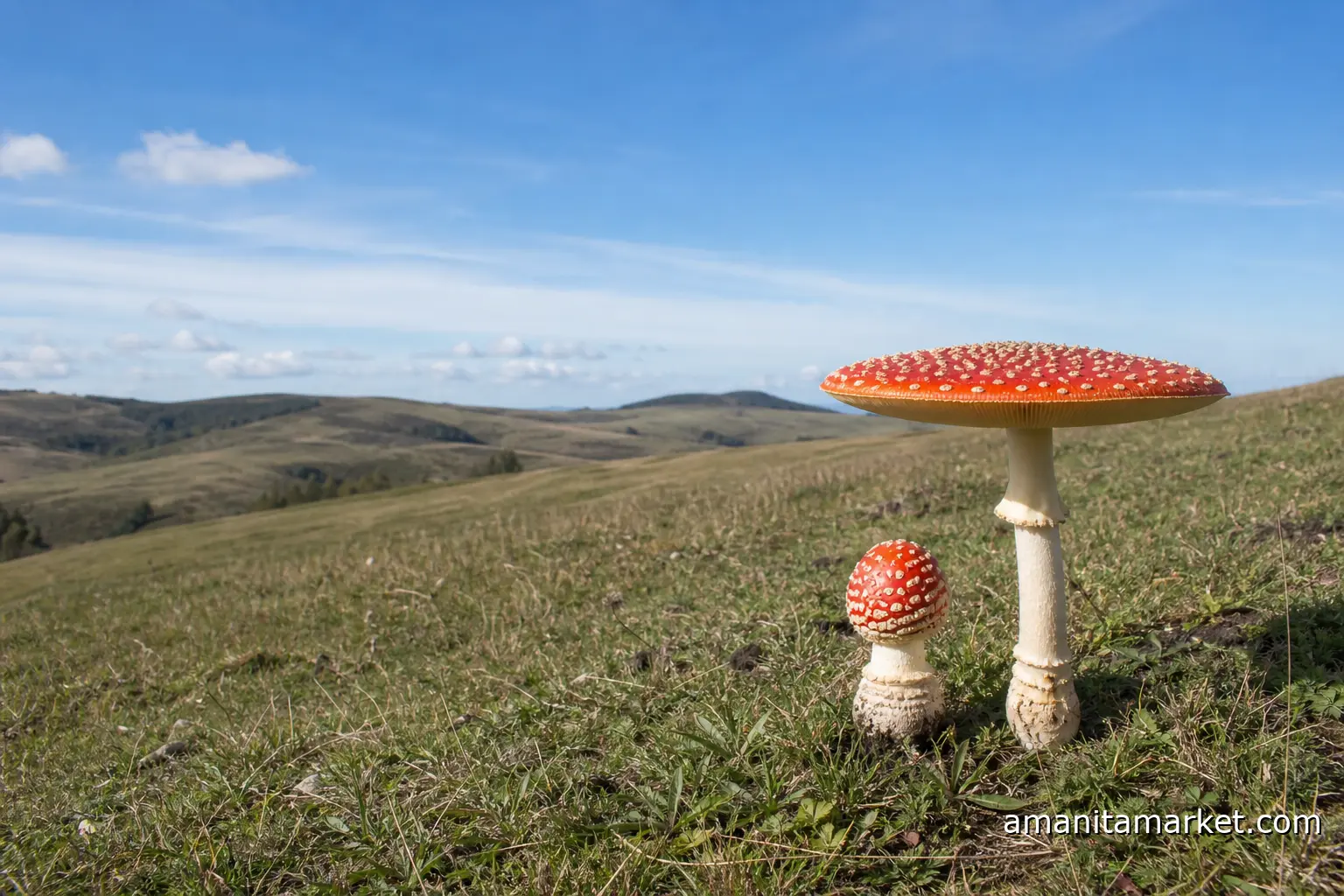
The Diamond Shruumz product recalls of 2024 became one of the most significant events in the recent history of muscimol-containing products — and one of the most important case studies for understanding the difference between legitimate ethnobotanical products and dangerous adulterated goods. The incident had nothing to do with traditional dried fly agaric, but it profoundly shaped regulatory and public perception of muscimol-containing products in the United States and beyond.
What Were Diamond Shruumz Products?
Diamond Shruumz was a US brand (made by Prophet Premium Blends) that marketed chocolate bars, gummies, and cones containing what was advertised as a proprietary “magic mushroom” or microdosing blend. The products were sold as federally legal alternatives to psilocybin mushrooms and were widely distributed through dispensaries, smoke shops, and online retailers across the United States. Their packaging and marketing were widely criticised for appealing to youth and young adults.
From early 2024, reports began emerging of serious adverse reactions among consumers — seizures, involuntary muscle contractions, loss of consciousness, abnormal heart rates, and respiratory failure. By mid-2024 the US Food and Drug Administration (FDA) and Centers for Disease Control and Prevention (CDC) were investigating a nationwide outbreak. By the time the FDA moved its investigation to post-incident status in late 2024, the CDC had recorded 180 cases, 73 hospitalisations, and 3 deaths across 34 states.
What the Investigation Actually Found
This is the part most often reported inaccurately. FDA laboratory testing did not find a single culprit — it found a cocktail of compounds, several of them undisclosed on the label. Alongside muscimol (and ibotenic acid in a raw ingredient), the agency identified acetylpsilocin (4-AcO-DMT / psilacetin), psilocin (a Schedule I substance), the prescription anticonvulsant pregabalin, and kavalactones from the kava plant. Crucially, muscimol was present in only some samples and, in the FDA’s own words, could not explain all the reported symptoms.
So the Diamond Shruumz incident was not a clean “muscimol toxicity” event, and it was certainly not a synthetic-cannabinoid event as it is sometimes wrongly described. It was an adulteration event: a manufactured edible that misrepresented its contents, mixed multiple psychoactive and pharmaceutical compounds, and varied unpredictably from batch to batch. Compounds that may be individually understood can interact unpredictably when combined, and that combination — not traditional dried fly agaric — is what harmed consumers.
Traditional Fly Agaric vs Adulterated Edibles
The single most important takeaway is that the product category matters more than the headline ingredient. The table below contrasts a traditional dried ethnobotanical specimen with the kind of manufactured edible involved in the recall.
| Feature | Traditional dried fly agaric | Diamond Shruumz-type edible |
|---|---|---|
| Contents | Only the mushroom’s natural compounds | Multiple added/undisclosed compounds |
| Processing | Wild-harvested, minimally dried | Manufactured, extracted, blended |
| Labelling | Sold as incense / collector botanical | Marketed as edible “microdose” candy |
| Consistency | Predictable, single-species | Varied unpredictably by batch |
| What went wrong | Not implicated in the recall | Subject of FDA recall and warnings |
Legitimate ethnobotanical dried Amanita muscaria — wild-harvested, minimally processed, and sold as incense or a collector’s specimen — contains only what nature put there. The Diamond Shruumz incident highlights the risks of manufactured consumables, not of traditional botanicals.
The FDA’s Position on Muscimol in Food
Following the recalls and related incidents, the FDA has been clear that muscimol is not an approved food additive and is not generally recognised as safe (GRAS) for use in food. Products marketed as foods or dietary supplements containing muscimol are therefore treated as adulterated and subject to regulatory action.
This position applies to food and supplement products — it does not change the status of dried Amanita muscaria sold as an ethnobotanical product for incense, decoration, or collection purposes. The legal distinction between a consumable food product and a traditional botanical specimen is meaningful and is preserved in the FDA’s regulatory framework.
The European Context: BfR 2024
The German Federal Institute for Risk Assessment (BfR) also issued risk communication in 2024, prompted partly by the US incidents and partly by European cases involving muscimol-containing gummies. The BfR identified muscimol in food products as presenting health risks, particularly for children, and recommended against marketing muscimol-containing foods.
As with the FDA position, the BfR assessment was specifically directed at food products. Dried fly agaric sold as Räucherwerk (incense material) or an ethnobotanical specimen falls outside the scope of food regulation and was not the subject of these advisories. Legitimate European suppliers of dried Amanita muscaria were not affected by these regulatory actions.
What This Means for Buyers
The Diamond Shruumz and BfR episodes reinforce the importance of buying from transparent suppliers who clearly position their products as non-consumable botanical items. Products that blur the line between ethnobotanical specimen and consumable supplement — or that contain undisclosed compounds — represent a fundamentally different and riskier category than traditional dried fly agaric.
Our dried Amanita muscaria is positioned and sold exclusively as an ethnobotanical incense and collector’s botanical — wild-harvested, minimally processed, containing only the natural compounds of the mushroom, and clearly placed outside the food and supplement categories. For our full product positioning, see our article on Amanita muscaria as an ethnobotanical product, and for the pharmacology behind the “magic mushroom” confusion, see is fly agaric a magic mushroom.
How to Buy Safely
A few simple checks separate a legitimate ethnobotanical supplier from a risky one. Look for products sold as whole or powdered dried mushroom rather than as edibles, candies, or gummies. Look for a single, clearly named species (Amanita muscaria) with a stated geographic origin, rather than a vague “proprietary blend.” Avoid anything that adds undisclosed compounds, makes dosage or medical claims, or is marketed like confectionery. Transparency about what the product is — and what it is not — is the clearest signal of a responsible seller.
Frequently Asked Questions
Did the Diamond Shruumz recall involve dried fly agaric?
No. The recall involved manufactured edibles — chocolate bars, gummies, and cones — that contained multiple undisclosed compounds. Traditional dried Amanita muscaria sold as an ethnobotanical specimen was not implicated.
Was muscimol the cause of the illnesses?
Not on its own. FDA testing found muscimol in only some samples and stated it could not explain all the symptoms. The products also contained psilacetin, psilocin, pregabalin, and kavalactones — an unpredictable mix rather than a single ingredient.
Is dried fly agaric affected by the FDA and BfR guidance?
No. Both the FDA position and the BfR communication addressed muscimol in food and supplement products. Dried fly agaric sold as incense or a collector’s botanical falls outside that scope.
Sources
- FDA — Diamond Shruumz recall and consumer warning (2024)
- CDC — Diamond Shruumz outbreak investigation: identified compounds and case counts
- Wikipedia — Muscimol: pharmacology and regulatory status
- BfR 2024 — Health risks of muscimol-containing products (bfr.bund.de)
- Wikipedia — Amanita muscaria: regulatory developments 2024
Legitimate Baltic fly agaric — dried Amanita muscaria as it should be: wild-harvested, minimally processed, clearly positioned as an ethnobotanical botanical, not a food product. Buy dried fly agaric from a transparent source.