
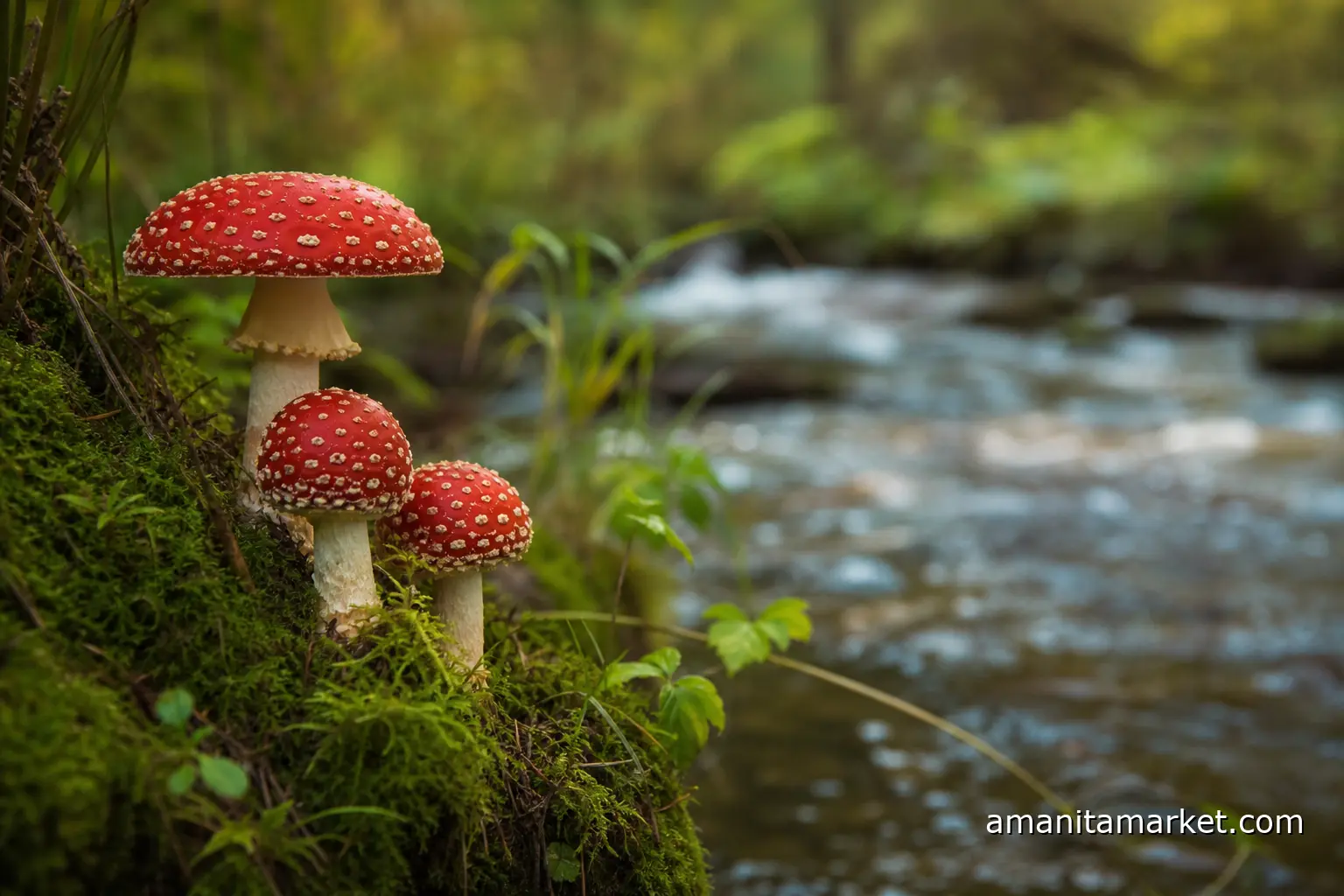
When purchasing dried Amanita muscaria, one of the first decisions is whether to buy whole dried caps (sometimes called “kappen” in the German-speaking market) or powder. Both are made from the same source material, but they differ in processing, handling, shelf life, and practical use. This guide covers everything you need to know to make the right choice for your purposes.
What Dried Fly Agaric Caps Actually Are
Dried fly agaric caps are the dehydrated upper part of the Amanita muscaria fruiting body — the red, white-spotted cap (pileus) without the stem. High-quality dried caps are produced by separating the cap from the stem at harvest, cleaning, and drying at low temperatures (35–45°C) until moisture content falls below 10%. The result is a recognisable, flat, somewhat leathery cap that retains the mushroom’s characteristic appearance.
The “caps only” specification is a meaningful quality indicator. According to Tsujikawa et al. (2019, PubMed 30782612), the cap tissue contains higher concentrations of the mushroom’s characteristic active compounds than the stem. Products that mix stems with caps therefore have a different and less concentrated compound profile than cap-only products. Reputable suppliers specify “caps only” and this should be confirmed before purchasing.
Visual Quality Assessment: What Good Caps Look Like
One of the key advantages of buying whole caps over powder is that visual quality assessment is possible. A good dried fly agaric cap should show: uniform red to orange-red colouration throughout (very dark brown or black indicates over-drying or poor storage); white spot remnants visible on most caps (some loss from handling is normal, complete absence is unusual); firm but flexible texture — a good cap bends without immediately crumbling; mild, earthy mushroom aroma with no musty or sour notes; and no signs of mould, discolouration patches, or unusual markings.
Very young caps (small, hemispherical) are less developed. Very old degraded caps are soft and discoloured. The best caps for collection and incense use are from specimens harvested at full maturity — wide, flat, firm, with vivid colouration.
Quality Indicators at a Glance
Use the table below as a quick checklist when inspecting dried caps — it contrasts what a good cap shows against the warning signs of poor quality.
| Indicator | Good quality | Warning sign |
|---|---|---|
| Colour | Uniform red to orange-red | Dark brown / black (over-dried) |
| White spots | Visible on most caps | Completely absent |
| Texture | Firm but flexible, bends | Crumbles instantly or soft/damp |
| Aroma | Mild, earthy | Musty or sour |
| Surface | Clean, even | Mould, patches, odd markings |
Caps vs Powder: Which to Choose
Whole caps and powder are both made from the same cap material — the difference is in handling and use case rather than quality. The comparison below lays out the trade-offs.
| Aspect | Whole caps | Powder |
|---|---|---|
| Quality inspection | You see exactly what you get | Not visually verifiable |
| Consistency | Varies cap to cap | Homogeneous |
| Portioning | Less precise | Easy and even |
| Shelf life | Slightly longer (less surface area) | Absorbs moisture faster |
| Best for | Display, collection, ritual incense | Regular incense use, convenience |
Storage Differences
Whole dried caps and powder have slightly different storage characteristics that are worth understanding. Powder, with its much larger surface area, absorbs atmospheric moisture more readily than whole caps. Once opened, powder should be transferred to an airtight container promptly and kept away from humidity. Whole caps are more forgiving of brief air exposure — the reduced surface area slows moisture reabsorption.
For long-term storage, both forms benefit from the same conditions: airtight container, cool temperature, darkness. Under these conditions, quality dried fly agaric retains its characteristics for up to two years. For detailed storage guidance applicable to both forms, see our article on how to store fly agaric.
Making Powder from Whole Caps at Home
Some buyers prefer to purchase whole dried caps and grind them to powder themselves — this gives the quality-assessment advantage of inspecting the whole cap combined with the convenience of powder for use. A standard blade coffee grinder works well for grinding dried fly agaric caps. Use short pulses to avoid generating heat, and transfer the resulting powder to an airtight container immediately after grinding, as freshly ground material has very high surface area and reabsorbs moisture quickly.
Grind only as much as you need for near-term use — larger quantities are better stored as whole caps and ground in batches. For a full overview of processing and preparation, see our fly agaric powder guide. Both caps and powder are available in our shop.
Frequently Asked Questions
Are caps better than powder?
Neither is higher quality — both are made from cap tissue. Whole caps let you inspect quality and store slightly longer; powder is more consistent and convenient to portion. The choice depends on your use case.
Why buy “caps only” rather than caps with stems?
Cap tissue contains higher concentrations of the characteristic active compounds than the stem, so a cap-only product has a more concentrated, consistent profile. Reputable suppliers state “caps only.”
How long do dried caps keep?
Stored airtight, cool and dark, quality dried fly agaric retains its characteristics for up to about two years. Whole caps are slightly more forgiving than powder due to less surface area.
Sources
Premium dried fly agaric caps — wild-harvested Baltic Amanita muscaria, caps only, low-temperature dried. Available whole or as powder.