
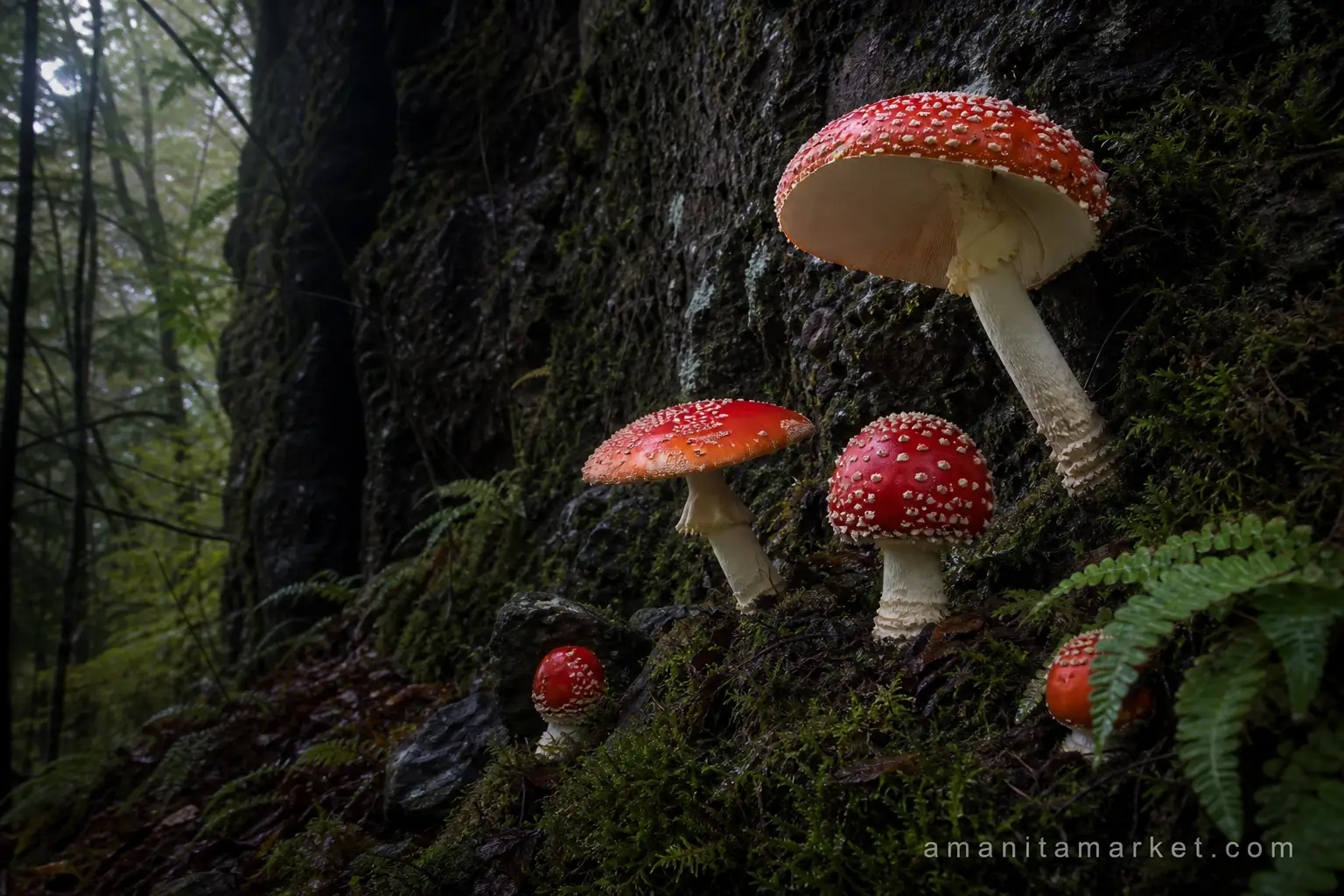
Drying is the single most important step in preparing Amanita muscaria for long-term storage and use. Done correctly, the drying process not only preserves the mushroom but also transforms its chemistry — converting ibotenic acid into muscimol and reducing moisture to a level that prevents mould and degradation. Done badly, it produces a product that is dark, smells wrong, and has lost much of what made it worth harvesting in the first place.
Why Drying Matters: The Chemistry
Fresh Amanita muscaria contains ibotenic acid as the dominant active compound, with muscimol present in smaller amounts. During drying, ibotenic acid undergoes decarboxylation — a chemical reaction in which it loses a carboxyl group (CO₂) and converts to muscimol. The extent of this conversion depends directly on temperature and drying time: higher temperatures accelerate conversion but also risk degrading both compounds if sustained too long or at too high a level.
The practical target is to dry the mushroom thoroughly enough to bring moisture content below 10% — the threshold for long-term stability — while keeping temperatures low enough to preserve the mushroom’s characteristics. Most experienced practitioners settle on a temperature range of 35–45°C as the optimal balance between conversion efficiency and compound preservation.
Ibotenic acid → Muscimol + CO₂. This conversion happens naturally at room temperature over time but is greatly accelerated by heat. In traditional Siberian practice, mushrooms were dried near the fire or in the sun. Modern low-temperature drying achieves the same conversion more controllably. The conversion is partial — dried Amanita muscaria always contains a mixture of both compounds.
Preparation Before Drying
Before drying begins, freshly harvested fly agaric caps should be cleaned of soil, leaf litter, and debris. A soft brush or damp cloth works well — avoid soaking in water, which introduces moisture that extends drying time and risks early mould development. The stem is typically removed at this stage: the cap contains the highest concentration of active compounds and is the portion used in quality dried products.
Caps can be dried whole or sliced. Whole caps take longer but present better visually and are preferred for products sold as whole dried caps. Sliced caps — typically cut 5–8mm thick — dry faster and more evenly, making them preferable for powder production. Uniform thickness matters: thin slices dry quickly and can become brittle and over-dry before thicker pieces have finished.
Drying Methods: From Traditional to Modern
Sun drying is the oldest method and still works well in conditions where it is practical. Caps are laid on clean racks or screens in direct sunlight, ideally with good airflow. The natural heat and UV exposure dry the material effectively, though sun drying is weather-dependent and offers less temperature control than modern alternatives.
Dehydrator drying is the most controllable modern method. A food dehydrator with temperature settings allows precise control of the 35–45°C range, consistent airflow across the trays, and predictable drying times. Most caps will dry to an appropriate moisture level within 6–10 hours at 40°C depending on thickness. A dehydrator is the tool of choice for anyone producing dried fly agaric at any serious scale.
Oven drying on the lowest possible setting (ideally with the oven door slightly ajar to allow moisture to escape) is a workable alternative when a dehydrator is not available. Most household ovens run hotter than ideal even at minimum settings, so monitoring is important — check regularly and remove caps as soon as they feel completely dry and leathery rather than pliable.
How to Tell When Drying Is Complete
Properly dried Amanita muscaria caps should feel completely dry and slightly leathery or crisp — not soft or pliable, which indicates remaining moisture. The colour will have shifted from vivid red to a slightly more muted ochre-red. The white wart remnants may have darkened slightly to cream or pale tan. The smell should be mild, earthy, and mushroomy — not musty, sour, or fermented, which indicates improper drying or the beginning of mould development.
A practical test: a properly dried cap should snap rather than bend when flexed. If it bends without breaking, it needs more time. If it crumbles to powder at a touch, it has been over-dried — this produces a more fragile product that is prone to dust and difficult to handle, though it remains usable.
Storage After Drying
Once dried, caps should be moved immediately to airtight storage — glass jars with rubber-seal lids are ideal. Dried fly agaric reabsorbs atmospheric moisture quickly if left exposed, undoing the drying work. For more detail on long-term storage after drying, see our guide on how to store fly agaric. For a comparison of whole dried caps versus powder, see fly agaric powder vs caps.
Our dried amanita muscaria powder is produced using controlled low-temperature drying — the same principles described here, applied at production scale in the Baltic region.
Sources
- Wikipedia — Decarboxylation: ibotenic acid to muscimol conversion during drying
- Wikipedia — Food drying: moisture reduction, temperature and preservation
- Deutsche Gesellschaft für Mykologie (DGfM) — Mushroom drying techniques
- Michelot & Melendez-Howell, 2003 — Amanita muscaria preparation and compound transformation (PubMed)
Skip the drying and buy ready-to-use amanita muscaria powder — our 150g pack is low-temperature dried and vacuum-sealed at source in the Baltic.